
Posted by UniHeatPacks on 19th Aug 2026
Building a Cold Shipping Subscription Business (2026)
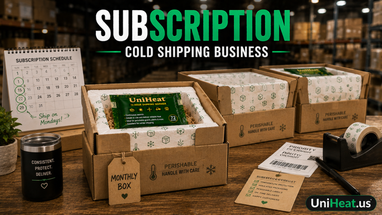
Cold shipping subscription businesses combine two of the most operationally demanding models in DTC commerce: temperature-controlled logistics and recurring fulfillment. When executed well, this combination creates some of the most defensible and profitable small business models in cold chain. Meal kits, wine clubs, chocolate boxes, feeder insect subscriptions, plant boxes, and specialty coffee are all examples of cold shipping subscription businesses that have built sustainable operations at various scales. This guide walks through the economic model, packaging discipline, retention math, and operational patterns that separate successful cold shipping subscription businesses from failed ones, extending our operational framework across our cold-weather shipping resource center.
The Short Answer: Predictability Enables Cold Chain Scale
Cold shipping subscription businesses work because predictable shipment volume solves several problems that one-off cold shipping businesses struggle with. Predictable volume means bulk packaging purchases (heat packs, EPS foam, boxes). Predictable ship days mean streamlined operations. Predictable customer relationships mean better feedback loops and lower per-shipment customer acquisition cost. Predictable cash flow means better inventory planning.
The economic model requires disciplined unit economics: lifetime value (LTV) must comfortably exceed customer acquisition cost (CAC) plus per-shipment costs (product cost, packaging, shipping, fulfillment labor). Cold shipping adds packaging and shipping costs that non-cold subscriptions don't have, making the LTV/CAC math tighter.
Retention is the single most important metric. Subscription businesses live or die on monthly churn rate. Cold shipping failures (freeze damage, live-animal mortality, spoiled food) drive churn faster than any other factor. This makes operational excellence not optional — it's the foundation of business viability. Framework connects to our capstone piece on cold chain solutions for small businesses.
Cold Shipping Subscription Business Categories
Meal Kit Subscriptions
The largest category by revenue. Companies like HelloFresh, Blue Apron, Sunbasket, and dozens of smaller operators ship weekly boxes of pre-portioned ingredients requiring temperature control.
- Volume: Weekly shipments, high frequency
- Product mix: Fresh produce, proteins, dairy — multiple temperature requirements per box
- Packaging complexity: High — multiple gel packs, insulated liners, moisture barriers
- Ship cost: $8-15 packaging + $12-25 shipping per box
- Business model: Volume-dependent, requires scale for profitability
Wine Clubs and Beverage Subscriptions
Craft wineries, specialty spirits shippers, craft beer clubs. Bottle-based products with freeze sensitivity in winter.
- Volume: Monthly or quarterly shipments
- Product mix: Wine, spirits, specialty beverages
- Packaging complexity: Moderate — bottle protection plus freeze protection in winter
- Ship cost: $5-12 packaging + $15-25 shipping per box (adult signature required)
- Business model: Higher margin, more relaxed volume requirements
Framework in our piece on how to ship wine, beer & spirits in winter.
Chocolate and Confection Subscriptions
Specialty chocolatiers, small-batch confection makers. Highly heat-sensitive product with unique challenges (chocolate blooms above 50°F).
- Volume: Monthly typical
- Product mix: Premium chocolates, confections, specialty sweets
- Packaging complexity: Moderate — heat protection in summer, moderate cold protection in winter
- Ship cost: $6-12 packaging + $10-20 shipping per box
- Business model: Premium pricing supports higher shipping costs
Feeder Insect Subscriptions
Recurring shipments of live crickets, dubia roaches, mealworms, and other feeders for reptile owners. Predictable recurring need.
- Volume: Weekly or bi-weekly typical
- Product mix: Live insects with ventilation requirements
- Packaging complexity: Moderate — ventilated containers, heat protection
- Ship cost: $4-8 packaging + $10-18 shipping per box
- Business model: Low-margin, volume-dependent
Framework in our piece on shipping live feeder insects.
Plant Subscription Boxes
Monthly houseplant deliveries. Grew rapidly during pandemic-era plant boom, now mature category with multiple operators.
- Volume: Monthly typical
- Product mix: Live tropical or temperate plants
- Packaging complexity: Moderate to high — freeze protection critical in winter, root ball moisture management
- Ship cost: $6-12 packaging + $12-25 shipping per box
- Business model: Curation and rarity drive premium pricing
Framework in our piece on heat mat vs heat pack for plant shipping.
Coffee Subscriptions
Specialty coffee roasters shipping freshly roasted beans monthly. Not typically requiring temperature control but time-sensitive freshness.
- Volume: Monthly typical
- Product mix: Roasted coffee beans
- Packaging complexity: Low to moderate — freshness sealing, not usually cold chain
- Ship cost: $2-5 packaging + $8-15 shipping
- Business model: Freshness-focused, standard shipping typical
Cheese and Dairy Subscriptions
Artisanal cheese clubs, small-batch dairy producers. Requires cold chain throughout.
- Volume: Monthly typical
- Product mix: Artisan cheeses, cured meats, dairy specialty items
- Packaging complexity: High — multiple gel packs, moisture management, food-safe insulation
- Ship cost: $8-15 packaging + $15-25 shipping per box
- Business model: Premium pricing supports demanding cold chain
Live Animal Subscriptions (Specialty)
Niche category including tarantula-of-the-month clubs, isopod subscriptions, and some invertebrate collections. Small market with dedicated enthusiast base.
- Volume: Monthly typical
- Product mix: Invertebrates, small live animals
- Packaging complexity: High — species-specific handling
- Ship cost: $10-20 packaging + $15-30 shipping
- Business model: Small niche, high engagement
Subscription vs One-Off Cold Shipping Economics
| Factor | One-Off Model | Subscription Model |
|---|---|---|
| Customer Acquisition Cost | Full CAC per order | Amortized across multiple orders |
| Packaging Cost Per Unit | Higher (smaller purchases) | Lower (bulk purchasing) |
| Cash Flow | Order-by-order | Predictable recurring revenue |
| Fulfillment Efficiency | Variable operations | Streamlined batch operations |
| Shipping Cost Negotiation | Retail rates | Volume-negotiated rates |
| Inventory Planning | Demand-based, harder to forecast | Subscriber-based, easier to forecast |
| Customer Feedback Loop | Limited to individual orders | Continuous relationship data |
| Reputation Risk | Per-transaction | Compounds (subscribers talk more) |
The Unit Economics Framework
Subscription cold shipping viability depends on getting the unit economics right:
Customer Lifetime Value (LTV)
Average revenue per subscriber times average subscription lifespan. For cold shipping subscriptions:
- Wine clubs: $50-100/month × 12-24 months = $600-2,400 LTV
- Meal kits: $60-90/week × 6-18 months = $1,440-6,480 LTV
- Chocolate boxes: $30-60/month × 6-24 months = $180-1,440 LTV
- Feeder insects: $20-40/week × 12-36 months = $960-6,240 LTV
- Plant boxes: $30-70/month × 6-18 months = $180-1,260 LTV
Customer Acquisition Cost (CAC)
Marketing spend divided by new customer count. Typical benchmarks:
- Wine clubs: $60-150 CAC
- Meal kits: $80-200 CAC
- Chocolate boxes: $20-80 CAC
- Feeder insects: $15-40 CAC
- Plant boxes: $30-100 CAC
The LTV/CAC Ratio
Healthy subscription businesses maintain LTV/CAC ratio of 3:1 or higher. For cold shipping, aim for 4:1 or higher because shipping costs are structurally higher than non-cold subscriptions.
Per-Shipment Contribution Margin
Revenue per shipment minus all variable costs (product, packaging, shipping, fulfillment labor). Aim for 30-50% contribution margin at maturity. Framework in our piece on cost vs protection in heat pack usage.
Packaging Cost Optimization at Volume
Bulk Purchasing Economics
Subscription volume unlocks bulk purchasing that one-off shippers can't access:
- Heat packs: Bulk pricing at 500+ units can be 30-50% below retail
- EPS foam: Custom sizing eliminates trimming waste
- Boxes: Custom-printed corrugated at 500+ unit runs cost less than blank boxes at retail
- Gel packs: Bulk reusable gel packs support programs where customers return packs
For bulk heat pack purchasing, our UniHeat shop offers 40-hour, 72-hour, and 96-hour options with volume-friendly pricing. For scaling patterns, see our piece on how to scale heat pack usage for higher volumes.
Standardization Advantages
Subscription operations benefit from standardization that one-off operations can't achieve:
- Same box size for every shipment reduces packing variability
- Same insulation configuration means training is simpler
- Same heat pack tier means inventory is simpler
- Same shipping profile means carrier rate optimization is easier
Seasonal Packaging Rotation
Cold shipping subscriptions typically use different packaging in summer vs winter:
- Winter configuration: Heat packs, 1.5-2″ EPS foam, minimal ventilation
- Summer configuration: Gel packs, similar EPS foam, moderate ventilation
- Shoulder season: May need both options available depending on route weather
Framework in our piece on dry ice vs heat packs vs gel packs.
Retention Math for Cold Shipping Subscriptions
The Impact of Cold Shipping Failures on Churn
Every cold shipping failure has amplified impact in a subscription context. A one-off customer who receives a freeze-damaged shipment might complain, get a refund, and never buy again — a $100 total business impact. A subscription customer who experiences the same failure often cancels the subscription, resulting in $1,000+ LTV loss.
This makes operational excellence non-negotiable for subscription cold shipping. Framework in our piece on how to reduce winter shipping losses.
Churn Rate Benchmarks
- Excellent: Under 3% monthly churn (long-lifetime subscribers)
- Good: 3-5% monthly churn (healthy business)
- Concerning: 5-8% monthly churn (needs improvement)
- Failing: 8%+ monthly churn (business at risk)
Note: Weekly meal kits typically have higher churn than monthly wine clubs due to frequency of failure opportunities.
Cold Shipping-Specific Churn Drivers
- Freeze damage to product (biggest single driver)
- Delivery delays that compromise perishables
- Live animal DOAs
- Weather-related shipping pauses
- Customer absence during delivery
- Product quality issues from thermal exposure
Churn Reduction Strategies
- Rock-solid operational discipline (packaging, ship days, route strategy)
- Proactive customer communication about delays and weather
- Generous replacement policies (customer retention outweighs replacement cost)
- Pause/skip options instead of cancellation-only
- Weather-aware ship day flexibility
Cash Flow Advantages of Subscription Model
Prepayment Cushion
Subscription businesses typically bill monthly (or per shipment) at time of shipment or slightly before. This provides working capital for the following month's inventory and shipping costs.
Predictable Revenue
Knowing next month's revenue with reasonable accuracy allows better inventory planning, better packaging purchasing, better staffing decisions.
Deferred Revenue Considerations
Subscription businesses need to track deferred revenue properly — money received but service not yet delivered. This is standard accounting but adds complexity vs one-off commerce.
Payment Processor Considerations
- Chargebacks can be higher for subscriptions (customers forget about signing up)
- Failed payments (expired cards, declined charges) reduce revenue if not managed
- Payment retry logic essential to prevent avoidable churn
Operational Patterns for Subscription Cold Shipping
Fixed Ship Days
Most subscription cold shipping businesses use fixed ship days:
- Monday for high-stakes shipments (live animals, most perishables)
- Tuesday for slightly hardier products
- Wednesday for products with more transit tolerance
This predictability helps customers plan for delivery. Framework in our piece on winter shipping checklist for small businesses.
Batch Fulfillment
Subscription operations batch fulfillment for efficiency:
- All Monday shipments packed together on Sunday-Monday
- Standardized assembly lines for identical packaging
- Quality check stations for last-mile verification
- Systematic carrier pickup or drop-off
Rolling Weekly Cycles
Subscription operations often run rolling weekly cycles where different customer cohorts ship on different weeks:
- Week 1: Customer group A
- Week 2: Customer group B
- Week 3: Customer group C
- Week 4: Customer group D
This distributes workload across the month rather than concentrating on a single day.
Weather-Aware Scheduling
Cold shipping subscriptions need weather-aware scheduling:
- Monitor origin, hub, and destination weather 48-72 hours ahead
- Delay shipments during extreme cold snaps
- Communicate delays proactively to customers
- Reschedule affected shipments rather than risk loss
Framework in our piece on route package protection.
Real Subscription Cold Shipping Scenarios
Scenario 1: Regional Wine Club (200 subscribers)
Business model: Monthly 3-bottle wine club at $60/month ($180 quarterly). 200 active subscribers = $12,000/month revenue. Packaging: $8 per box (bottle protection + winter freeze protection). Shipping: $18-25 per box (adult signature required for alcohol). Total cost per box: $26-33 plus product cost. Ship days: Tuesday-Wednesday (bottles have more transit tolerance than live animals). Loss rate: 0.5% (excellent). Churn: 4% monthly (healthy). LTV: 24 months average = $1,440. CAC: $80. LTV/CAC: 18:1 (very healthy). Framework in our piece on how to ship wine, beer & spirits in winter.
Scenario 2: Meal Kit Startup (500 subscribers)
Business model: Weekly meal kit at $80/box, 4 boxes/month = $320/month subscriber value. 500 active subscribers = $160,000/month revenue. Packaging: $12 per box (multiple gel packs, insulated liner, moisture barriers). Shipping: $18-22 per box. Total cost per box: $30-34 plus product cost. Ship days: Monday-Tuesday. Loss rate: 2% (industry typical). Churn: 6% monthly (industry typical for meal kits). LTV: 8 months average = $2,560. CAC: $150. LTV/CAC: 17:1 (healthy).
Scenario 3: Feeder Insect Subscription (800 subscribers)
Business model: Weekly feeder insect delivery at $25/box, 4 boxes/month = $100/month subscriber value. 800 active subscribers = $80,000/month revenue. Packaging: $5 per box (ventilated container, moderate insulation, heat pack in winter). Shipping: $12-18 per box (USPS accepted). Total cost per box: $17-23 plus product cost. Ship days: Monday. Loss rate: 3-4% (feeder insect industry typical). Churn: 5% monthly (reptile keepers are steady customers). LTV: 20 months average = $2,000. CAC: $30. LTV/CAC: 67:1 (excellent).
Scenario 4: Chocolate Subscription (300 subscribers)
Business model: Monthly artisan chocolate box at $45/month. 300 active subscribers = $13,500/month revenue. Packaging: $8 per box (insulation, seasonal cold or heat pack). Shipping: $15-20 per box. Total cost per box: $23-28 plus product cost. Ship days: Monday-Tuesday. Loss rate: 1% (chocolate is relatively stable if packaged well). Churn: 5% monthly. LTV: 18 months average = $810. CAC: $50. LTV/CAC: 16:1 (healthy).
Scenario 5: Plant Subscription Box (600 subscribers)
Business model: Monthly houseplant box at $40/month. 600 active subscribers = $24,000/month revenue. Packaging: $10 per box (freeze protection critical in winter). Shipping: $15-25 per box. Total cost per box: $25-35 plus product cost. Ship days: Monday-Tuesday. Loss rate: 3% (plant shipping variable). Churn: 7% monthly (plant subscriptions have higher churn than food). LTV: 10 months average = $400. CAC: $60. LTV/CAC: 6.7:1 (healthy but tighter). Framework in our piece on heat mat vs heat pack for plant shipping.
Common Subscription Cold Shipping Mistakes
Mistake 1: Underpricing to acquire customers. Discounted acquisition prices that don't cover per-shipment costs turn subscribers into losses. Every shipment must be profitable, not just the first one.
Mistake 2: Ignoring seasonality. Winter cold shipping costs 20-40% more in packaging than summer. Businesses that price for summer economics lose money in winter.
Mistake 3: Rigid delivery schedules. Not offering pause, skip, or reschedule options increases cancellations. Customers who can pause often stay long-term; customers forced to cancel rarely return.
Mistake 4: Cutting corners on packaging. Saving $2 per box on packaging while losing $150 average LTV to a single failure is bad math. Framework in our piece on 5 common mistakes when using heat packs.
Mistake 5: Poor payment failure recovery. Failed payments (expired cards) that aren't retried create avoidable churn. Automated retry systems recover 30-50% of failed payments.
Mistake 6: No proactive weather communication. Customers who lose products to weather-related failures blame the seller, not the weather. Proactive delays with communication preserve relationships.
Mistake 7: Treating all subscribers the same. Long-term subscribers deserve different treatment than new subscribers. Loyalty programs, tier-based benefits, and personalized handling reduce churn.
Customer Experience Design
Onboarding
The first shipment is the highest-risk period for churn. Investment in onboarding pays back:
- Welcome email with delivery expectations
- Detailed unboxing guidance
- Product usage/handling instructions
- First-shipment follow-up check-in
Ongoing Relationship
- Regular delivery schedule communication
- Weather-related update proactively
- Product care/usage tips relevant to current shipment
- Community engagement (recipes for meal kits, care guides for plants, etc.)
Retention Interventions
- Pause/skip options when customers signal disengagement
- Personalized outreach for at-risk accounts
- Customization options (dietary preferences, plant preferences, etc.)
- Special occasion recognition (birthdays, anniversaries)
Cancellation Handling
- Exit surveys to understand reasons
- Offer pause instead of cancel
- Downgrade options (less frequent shipments)
- Win-back campaigns 30-90 days post-cancellation
Scaling Considerations
Volume Thresholds
Different volume thresholds unlock different operational patterns:
- 50-200 subscribers: Founder-operated, manual processes acceptable
- 200-500 subscribers: Part-time help needed, systems increasingly important
- 500-2000 subscribers: Dedicated team, automated systems required
- 2000+ subscribers: Multiple fulfillment shifts, sophisticated systems
Fulfillment Automation
Growing subscription operations invest in:
- Order management systems that integrate with e-commerce and shipping platforms
- Batch label printing systems
- Packaging assembly line workflows
- Quality control stations
- Inventory management with automatic reorder
Multi-Facility Considerations
Larger subscription operations may benefit from multiple fulfillment facilities to reduce shipping distances and costs. This adds complexity but can reduce delivery times and shipping costs significantly for cold shipping.
3PL Considerations
Third-party logistics providers can handle cold shipping subscription fulfillment. Considerations:
- Cost per shipment may be higher than in-house
- Quality control harder to maintain
- Customer experience less controlled
- But: allows focus on marketing and product
- Can enable multi-region shipping without owning facilities
Pause/Skip Options: Why They Matter
Pause and skip options are among the most powerful churn reduction tools for cold shipping subscriptions:
Vacation Pauses
Customers traveling for weeks or months need pause options. Forcing them to cancel loses long-term subscribers over temporary situations.
Weather-Related Pauses
Some customers pause during extreme weather months. Better to keep them subscribed than lose them.
Life Event Pauses
Moving, family changes, financial issues — life circumstances that don't need to end the subscription permanently.
Product-Specific Pauses
Some subscribers pause during specific seasons or product types they don't want.
Implementation
- Self-service pause functionality (not require customer service contact)
- Clear pause duration options (1 month, 3 months, 6 months, indefinite)
- Automatic resume with notification
- Optional check-in during long pauses
Payment and Retention Systems
Payment Retry Logic
Failed payments (expired cards, insufficient funds, temporary declines) create avoidable churn. Effective retry systems:
- Retry after 1 day (temporary issue)
- Retry after 3 days (delayed replacement card)
- Retry after 7 days (final attempt)
- Automated customer notification of payment issues
- Easy update payment method flow
Dunning Management
Dunning is the process of collecting overdue payments. Effective dunning:
- Email notifications of payment failures
- Grace period before service interruption
- Clear communication about consequences
- Simple update payment methods
Chargeback Management
Cold shipping subscriptions face specific chargeback risks:
- Customers forgetting they subscribed and disputing charges
- Customers unhappy with cold shipping failures
- Customers claiming non-delivery when packages were signed for
Framework in our piece on cold shipping insurance and liability.
Analytics and Optimization
Key Metrics to Track
- Monthly recurring revenue (MRR)
- New subscriber acquisition rate
- Churn rate (monthly, by cohort)
- LTV (by cohort)
- CAC (by channel)
- Cold shipping loss rate
- Payment failure rate
- Pause/resume rates
Cohort Analysis
Different subscriber cohorts (by acquisition channel, by month acquired, by product tier) behave differently. Cohort analysis reveals patterns:
- Facebook-acquired subscribers may churn faster than email-acquired
- Holiday cohorts often churn faster than off-season cohorts
- Higher-tier subscribers typically retain longer
Continuous Improvement
- Monthly review of key metrics
- Root cause analysis of churn spikes
- A/B testing on packaging, pricing, and communication
- Customer interview program for qualitative insights
Marketing Considerations for Cold Shipping Subscriptions
Content Marketing
Content marketing works well for cold shipping subscriptions because customers need education (recipes for meal kits, care guides for plants, tasting notes for wine).
Community Building
Successful subscription businesses often have engaged communities:
- Facebook groups for subscribers
- Instagram engagement
- Email newsletters with content
- Blog with educational material
Referral Programs
Referral programs work well for cold shipping subscriptions because subscribers who love the product share it naturally.
Retention Marketing
Ongoing marketing to current subscribers reduces churn:
- Educational content about products
- Community engagement
- Special occasion recognition
- Exclusive subscriber content
How Subscription Cold Shipping Connects to Broader Operations
Cold shipping subscription businesses use the same fundamental operational patterns as one-off cold shipping but with amplified importance. Packaging discipline matters more (any failure affects retention). Ship-day discipline matters more (predictable schedules serve customer expectations). Documentation matters more (subscriber patterns are your business intelligence).
For the broader operational system view:
- Cold Chain Solutions for Small Business — unified operational framework
- Building a Reliable Cold Shipping System — operational architecture
- How to Scale Heat Pack Usage for Higher Volumes — scaling framework
- Cold Shipping Insurance & Liability — risk management
- Winter Shipping Checklist for Small Businesses — daily discipline
- How to Reduce Winter Shipping Losses — loss prevention
- Insulated Shipping Containers Guide — container framework
- How to Select the Perfect Heat Pack Duration — pack framework
- Cold-Weather Shipping Protection Reference — product-specific configurations
- Managing Expectations Around Heat Pack Performance — realistic performance framing
For product-specific patterns within subscription models, our vertical guides on food shipping, frozen meat shipping for meal kits, baked goods shipping for bakery subscriptions, feeder insect shipping, plant shipping, aquarium fish shipping, reptile shipping, and beverage shipping apply directly to subscription categories. For seasonal switching between winter and summer, our comparison of gel packs vs heat packs guides subscription operations calendars. Bulk pack purchasing that supports subscription volume economics is available through our UniHeat shop and full shipping solutions.
Highlights — Subscription Cold Shipping Reference Card
Frequently Asked Questions
What's the typical margin for a cold shipping subscription business?
Cold shipping subscription businesses target 30-50% contribution margin at maturity (revenue minus product cost, packaging, shipping, and fulfillment labor). Meal kits typically operate at 30-40% contribution margin due to product cost intensity. Wine and specialty subscriptions can achieve 45-55% margins. Feeder insect and other simple subscriptions may operate at 40-50% margins. Total operating margins (after fixed costs and marketing) typically run 10-20% at maturity for well-run subscription cold shipping businesses. New businesses often operate at negative margins during customer acquisition phase.
How much can I save on packaging by shipping subscription volume?
Volume purchasing typically saves 20-40% on packaging costs compared to one-off retail purchasing. Heat pack bulk pricing at 500+ units can be 30-50% below retail. Custom-printed corrugated boxes at 500+ unit runs cost less than blank boxes at retail. Standardized configurations eliminate trimming waste on EPS foam. Volume-negotiated shipping rates can reduce shipping costs 15-25% compared to retail. Combined savings across packaging and shipping can total $3-8 per box for meaningful subscription volumes.
What's a healthy churn rate for cold shipping subscriptions?
Healthy monthly churn benchmarks: excellent under 3%, good 3-5%, concerning 5-8%, failing above 8%. Weekly meal kits typically run higher churn (5-8%) than monthly wine clubs (3-5%) due to more frequent failure opportunities. Feeder insect subscriptions can achieve 3-5% monthly churn due to consistent customer need. Plant subscriptions typically run 5-7% monthly churn (higher variability in what excites subscribers). Cold shipping failures drive churn faster than any other factor, making operational excellence critical to retention.
Should I offer pause and skip options?
Yes. Pause and skip options are among the most powerful churn reduction tools available. Customers who can pause during vacations, weather issues, or life events often stay long-term; customers forced to cancel rarely return. Standard implementation: self-service pause functionality (not requiring customer service contact), clear pause duration options (1 month, 3 months, 6 months, indefinite), automatic resume with notification, and optional check-in during long pauses. The revenue lost from pauses is typically much smaller than the revenue saved from preventing permanent cancellations.
How do I handle weather-related shipping delays?
Weather-aware scheduling is critical for cold shipping subscriptions. Monitor origin, hub, and destination weather 48-72 hours ahead of ship day. Delay shipments during extreme cold snaps rather than risk product loss. Communicate delays proactively to customers before they occur, not after. Reschedule affected shipments to safer weather windows. Customers appreciate proactive communication far more than they resent minor delivery delays. Product loss from weather typically causes more churn than delivery delays for weather. Framework in our piece on route package protection.
What's the best way to acquire cold shipping subscribers?
Effective acquisition channels vary by category. Facebook and Instagram ads work well for visual products (plants, meal kits, chocolate). Referral programs work well because subscribers who love products share them naturally. Content marketing works because customers need education (recipes, care guides, tasting notes). Influencer partnerships can accelerate visibility in specific niches. Free trial or discounted first-box offers reduce trial friction but need to be economically sustainable (first-box discount cost must be recovered through LTV). Aim for CAC that's under 25% of LTV for healthy unit economics.
How do I handle payment failures on subscriptions?
Automated payment retry logic is essential. Standard approach: retry after 1 day (temporary issues), retry after 3 days (delayed replacement cards), retry after 7 days (final attempt). Send email notifications to customers about payment failures with easy update payment method links. Effective retry systems recover 30-50% of failed payments that would otherwise become churn. Grace period before service interruption typically 7-14 days. After grace period, pause subscription rather than cancel — some customers return once payment issues resolve. Poor payment failure handling creates avoidable churn that's easy to prevent.
Should I use a 3PL or handle fulfillment in-house?
Depends on scale and control preferences. In-house fulfillment provides better quality control and customer experience but requires facility, labor, and management overhead. 3PL fulfillment scales more easily and requires less operational investment but may have higher per-shipment costs and less quality control. Cold shipping specifically has 3PL constraints — not all 3PLs handle cold chain competently. Small operations (under 500 shipments per week) often benefit from in-house control. Large operations (2,000+ shipments per week) increasingly benefit from 3PL scale. Mid-size operations should evaluate carefully based on their specific product requirements and margin structure.
Summary
Cold shipping subscription businesses combine the operational demands of temperature-controlled logistics with the economic mechanics of recurring revenue. When executed well, this combination creates some of the most defensible small business models in DTC commerce. Meal kits, wine clubs, chocolate boxes, feeder insects, plant subscriptions, and coffee clubs all use variations of this model successfully.
Success requires disciplined unit economics (LTV/CAC ratio of 4:1 or higher for cold shipping), operational excellence (cold shipping failures drive churn faster than any other factor), predictable ship-day cadence (supports customer scheduling), and retention-focused customer experience (pause options, payment retry, proactive communication).
Volume unlocks packaging cost reductions and operational efficiencies unavailable to one-off shippers. Subscription cash flow provides working capital advantages. Recurring customer relationships enable better feedback loops and lower amortized CAC. But cold shipping subscription operations must prioritize quality over cost cutting because every failure has amplified impact through the retention math.
For the broader operational system that supports effective subscription cold shipping, see our shipping solutions resource center, our capstone piece on cold chain solutions for small businesses, and comprehensive coverage across heat pack topics, cold shipping, and temperature control shipping. For product-specific patterns within subscription categories, our vertical guides across food, beverage, live animal, and plant shipping apply directly to subscription implementations of those categories.