
Posted by UniHeatPacks on 26th Jul 2026
Cold-Weather Shipping Protection Reference Table (65+ Products)
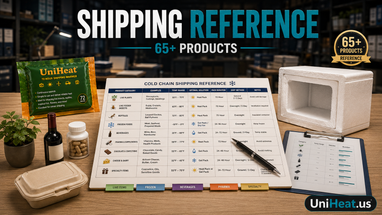
This is a comprehensive reference table for cold-weather shipping protection across 65+ common shipped product categories. For each product, we've documented the freeze threshold, the recommended heat pack tier (40hr, 72hr, or 96hr), the recommended insulation, the standard container size, and the special considerations that apply to that category. This resource is designed as a working reference for DTC shippers, small business logistics coordinators, and anyone building cold-weather shipping operations — and as a citable resource for industry publications, business bloggers, and content creators working on cold chain topics. This consolidates knowledge from the framework we've built across our cold-weather shipping resource center.
How This Reference Was Built
This reference table consolidates operational data from cold-weather shipping across multiple verticals. Freeze thresholds are drawn from product-specific damage-onset temperatures. Pack tier recommendations reflect standard SMB configurations that balance protection with cost. Insulation recommendations follow the 1.5-inch EPS foam standard for cold-weather shipping, upgraded to 2-inch for premium categories or extreme cold destinations.
For the foundational framework behind these recommendations, see our capstone piece on cold chain solutions for small businesses, which walks through the operational architecture that supports SMB cold chain across all verticals.
The Full Reference Table
The table below covers 65+ product categories organized by vertical. Each row includes the freeze threshold, recommended heat pack tier, insulation requirement, container size guidance, and special considerations. This is designed to be printable and citable.
Live Plants
| Product | Freeze Threshold | Pack Tier | Insulation | Container Size | Special Considerations |
|---|---|---|---|---|---|
| Tropical houseplants | 45°F chilling injury; 32°F freeze | 72hr | 1.5″ EPS | 10-14″ | 96hr for USDA zones 3-5 |
| Succulents | 32°F | 72hr | 1.5″ EPS | 8-10″ | More cold-tolerant than tropicals |
| Orchids | 50°F chilling; 32°F freeze | 72-96hr | 1.5-2″ EPS | 10-12″ | Highly cold-sensitive; premium protection |
| Seeds & seedlings | 40°F | 72hr | 1.5″ EPS | 6-10″ | Freeze causes germination failure |
| Bulbs | 28°F | 40-72hr | 1.5″ EPS | 8-12″ | More cold-tolerant than plants |
| Bonsai trees | Varies by species (25-40°F) | 72-96hr | 1.5-2″ EPS | 14-18″ | Requires custom containers |
| Cut flowers | 33°F | 72hr | 1.5″ EPS | 10-14″ | Freeze damages petals immediately |
For deeper guidance on plant shipping, see our piece on heat mat vs heat pack for plant shipping.
Live Animals
| Product | Freeze Threshold | Pack Tier | Insulation | Container Size | Special Considerations |
|---|---|---|---|---|---|
| Ball pythons | 55°F stress; 40°F mortality | 96hr | 2″ EPS | 10-14″ | Highest stakes; ship Monday only |
| Colubrid snakes | 50°F stress; 35°F mortality | 72-96hr | 2″ EPS | 8-12″ | More cold-tolerant than boas |
| Bearded dragons | 55°F stress; 40°F mortality | 96hr | 2″ EPS | 10-14″ | Very warm-adapted species |
| Leopard geckos | 55°F stress; 40°F mortality | 72-96hr | 2″ EPS | 8-10″ | Small-body-mass; needs full protection |
| Turtles & tortoises | Varies by species | 72-96hr | 2″ EPS | 12-18″ | USDA regulations may apply |
| Amphibians (frogs, salamanders) | 45°F stress; 32°F mortality | 72-96hr | 2″ EPS | 8-12″ | Requires moisture management |
| Tropical fish (bagged) | 65°F stress; 55°F mortality | 72-96hr | 1.5-2″ EPS | 10-14″ | Water provides thermal buffer |
| Cold-water fish | 45°F stress; 35°F mortality | 72hr | 1.5″ EPS | 10-14″ | Trout, goldfish, koi more cold-tolerant |
For detailed live-animal protocols, see our pieces on ball python winter shipping and shipping tropical fish safely in winter.
Live Feeder Insects
| Product | Freeze Threshold | Pack Tier | Insulation | Container Size | Special Considerations |
|---|---|---|---|---|---|
| Crickets | 55°F stress; 45°F mortality | 72-96hr | 1.5″ EPS | 8-12″ | Ventilation required; Monday only |
| Dubia roaches | 50°F stress; 40°F mortality | 72hr | 1.5″ EPS | 8-10″ | Prohibited in FL, HI |
| Mealworms | 40°F stress; 32°F mortality | 40-72hr | 1.5″ EPS | 6-10″ | Most cold-tolerant common feeder |
| Superworms | 50°F stress; 40°F mortality | 72hr | 1.5″ EPS | 6-10″ | Cannibalism risk under stress |
| Waxworms | 50°F stress; 40°F mortality | 72hr (cool storage preferred) | 1.5″ EPS | 6-8″ | Pupates above 80°F |
| BSFL (black soldier fly larvae) | 50°F stress; 45°F mortality | 72hr | 1.5″ EPS | 6-10″ | Popular with chicken keepers |
For the complete feeder shipping framework, see our recent piece on shipping live feeder insects safely.
Fresh Food
| Product | Freeze Threshold | Pack Tier | Insulation | Container Size | Special Considerations |
|---|---|---|---|---|---|
| Meal kits (fresh) | 32°F | 72hr | 1.5″ EPS | 10-14″ | Buffer food from pack |
| Baked goods (bread) | 32°F texture | 40-72hr | 1.5″ EPS | 10-12″ | Cosmetic sensitivity |
| Pastries & cakes | 32°F cosmetic damage | 72hr | 1.5″ EPS | 10-14″ | Decoration damage risk |
| Chocolate (premium) | 50°F fat bloom risk | 72-96hr | 1.5-2″ EPS | 8-12″ | Highly cosmetic-sensitive |
| Fresh produce (tropical fruits) | 56°F chilling injury | 72hr | 1.5″ EPS | 12-14″ | Bananas, tomatoes damage above freezing |
| Fresh produce (temperate) | 32°F | 72hr | 1.5″ EPS | 12-14″ | More cold-tolerant than tropicals |
| Fresh cheese (soft) | 32°F texture | 72hr | 1.5″ EPS | 10-12″ | Freeze-thaw affects texture |
| Fresh cheese (aged/hard) | 28°F | 72hr | 1.5″ EPS | 8-12″ | More cold-tolerant |
| Honey & maple syrup | 32°F crystallization | 72hr | 1.5″ EPS | 8-10″ | Partially reversible damage |
| Cold-pressed oils | 32°F sediment | 72hr | 1.5″ EPS | 8-10″ | Cosmetic sediment on freeze |
For food shipping details, see our pieces on heat packs for food shipping, insulated food delivery bags vs boxes, and specialty food and chocolate shipping.
Beverages
| Product | Freeze Threshold | Pack Tier | Insulation | Container Size | Special Considerations |
|---|---|---|---|---|---|
| Wine (table) | 22°F | 72hr | 1.5″ EPS | 8-14″ | Molded pulp inserts required |
| Wine (fortified) | 15°F | 72hr | 1.5″ EPS | 8-12″ | More cold-tolerant |
| Sparkling wine/champagne | 23°F | 96hr | 2″ EPS | 8-12″ | Bottle burst risk from pressure |
| Beer (regular ABV) | 28°F | 72hr | 1.5″ EPS | 10-14″ | Carbonation pressure burst risk |
| Beer (craft/high ABV) | 25°F | 72hr | 1.5″ EPS | 10-14″ | Slightly more freeze-tolerant |
| Spirits (whiskey, vodka, gin) | -15 to -20°F | 40-72hr | 1.5″ EPS | 8-12″ | Cloudiness below 20°F |
| Mead | 22°F | 72hr | 1.5″ EPS | 8-12″ | Similar to wine |
| Cider | 26°F | 72hr | 1.5″ EPS | 10-14″ | Between beer and wine profile |
| Kombucha | 28°F | 72hr | 1.5″ EPS | 10-14″ | Carbonation similar to beer |
| Cold-brew coffee | 30°F | 72hr | 1.5″ EPS | 10-14″ | Standard bottle shipping |
| Functional beverages | 28°F | 72hr | 1.5″ EPS | 10-14″ | Growing category |
For beverage shipping frameworks, see our piece on how to ship wine, beer & spirits in winter.
Pharmaceuticals & Supplements
| Product | Freeze Threshold | Pack Tier | Insulation | Container Size | Special Considerations |
|---|---|---|---|---|---|
| Basic vitamins (solid form) | 32°F | 40-72hr | 1.5″ EPS | 6-10″ | Minimal cold protection needed |
| Liquid supplements/tinctures | -10 to 22°F (alcohol-based) | 72-96hr | 1.5″ EPS | 6-10″ | Similar to spirits |
| Probiotics (heat-sensitive) | Refrigerated (2-8°C) | Gel packs (not heat) | 1.5-2″ EPS | 6-10″ | Needs cooling, not warming |
| Cosmetics with SPF | 32°F emulsion damage | 72hr | 1.5″ EPS | 6-8″ | OTC drug regulation applies |
| Gummies & soft supplements | 30°F texture | 72hr | 1.5″ EPS | 6-10″ | Also heat-sensitive |
| Herbal tinctures | -10 to 15°F (alcohol-based) | 72hr | 1.5″ EPS | 8-10″ | Alcohol content lowers freeze point |
| OTC medications | Varies | Product-specific | 1.5″ EPS | 6-10″ | Follow manufacturer specs |
For pharma-adjacent shipping guidance, see our piece on pharmaceutical cold chain packaging for small businesses.
Personal Care & Cosmetics
| Product | Freeze Threshold | Pack Tier | Insulation | Container Size | Special Considerations |
|---|---|---|---|---|---|
| Emulsion creams & lotions | 32°F separation | 72hr | 1.5″ EPS | 6-10″ | Freeze breaks emulsion permanently |
| Serums (water-based) | 30°F | 72hr | 1.5″ EPS | 6-8″ | Preserves active ingredients |
| Body oils (single-ingredient) | Varies by oil | 40-72hr | 1.5″ EPS | 6-8″ | Some oils solidify at cold temps |
| Lipsticks & solids | 32°F cracking | 40hr | 1.5″ EPS | 6-8″ | Cosmetic damage on freeze |
| Perfumes & fragrances | -15 to 15°F (alcohol-based) | 40hr | 1.5″ EPS | 6-8″ | Similar to spirits |
Frozen Products
Frozen products require different technology entirely — dry ice or sub-zero gel packs rather than heat packs. The full framework for these categories is in our recent piece on how to ship frozen meat & food overnight, and our 3-way comparison in dry ice vs heat packs vs gel packs.
| Product | Target Range | Cooling Media | Insulation | Container Size | Special Considerations |
|---|---|---|---|---|---|
| Frozen meat | Below 32°F | Sub-zero gel packs or dry ice | 2″ EPS | 12-16″ | Vacuum sealed products |
| Frozen seafood | Below 20°F | Dry ice preferred | 2″ EPS | 12-14″ | More temperature-sensitive than meat |
| Ice cream | Below 10°F | Dry ice required | 3″ EPS | 12-14″ | Highest cost frozen category |
| Frozen meals | Below 32°F | Sub-zero gel packs | 2″ EPS | 14-16″ | Larger boxes for multi-meal |
| Frozen dairy | Below 25°F | Dry ice | 2″ EPS | 10-14″ | Includes frozen yogurt, gelato |
How to Cite This Reference
This reference table is designed for both practical use and citation by other content creators. If you'd like to reference this data in your own resources:
Citation Format
"Cold-Weather Shipping Protection Reference Table (65+ Products)," UniHeat.us Shipping Solutions Resource Center, https://uniheat.us/cold-weather-shipping-protection-reference/, accessed [date].
Sharing This Resource
For industry publications, business blogs, or educational resources referencing cold-chain shipping data, this consolidated table serves as a starting point. The data reflects operational experience across SMB cold chain operations and industry-standard practices as of 2026.
Data Sources
Freeze thresholds are drawn from product-specific damage-onset temperatures documented across categories. Pack tier recommendations follow standard SMB configurations. Insulation recommendations reflect the 1.5″ EPS foam standard for cold-weather shipping. Special considerations reflect operational patterns across live-organism, food, beverage, and pharmaceutical shipping.
Understanding the Recommendations
Pack Tier Selection
- 40-hour pack — Short routes, mild winter conditions, warm destinations. Budget tier appropriate for less demanding scenarios.
- 72-hour pack — Standard winter shipping. Most common choice across categories. Provides 24 hours of expected transit plus buffer.
- 96-hour pack — Cold-zone destinations (USDA 3-5), premium products, weekend delay risk, live-animal shipments.
Full pack selection framework in our piece on how to select the perfect heat pack duration.
Insulation Recommendations
- 1.5″ EPS foam — Standard for cold-weather shipping across most categories
- 2″ EPS foam — Frozen shipping, live animal shipping, premium categories, extreme cold routes
- 3″ EPS foam — Ice cream and extremely temperature-critical products
Full insulation framework in our recent piece on insulated shipping containers: types, sizes & selection guide. For the deeper relationship between insulation and pack performance, see our foundational piece on heat pack vs insulation in cold shipping. For material choices see shipping container insulation guide.
Container Size Recommendations
- 6-8″ interior — Small orders, single specialty items, sample shipments
- 8-10″ interior — Small live animals, individual product boxes, small feeder orders
- 10-12″ interior — Standard meal kits, medium wine cases, single-plant shipments
- 12-14″ interior — Frozen meat orders, larger meal kits, 6-bottle wine cases
- 14-18″ interior — Multi-item catering, large produce boxes, wholesale shipments
Common Themes Across Categories
Reading across the full reference table, several patterns emerge:
Freeze Sensitivity Scales with Water Content
Products with high water content (fresh produce, live animals, plants) freeze at higher temperatures than concentrated products (spirits, honey, tinctures). Water-based products need protection above 32°F; alcohol-based products can tolerate 15-22°F.
Pressure-Containing Products Have Bottle Burst Risk
Carbonated beverages (beer, kombucha, sparkling wine, cider) can burst bottles when the liquid expands with freezing. This makes them higher-risk categories than non-carbonated equivalents (spirits, still wine).
Cosmetic Categories Have Distinct Failure Modes
Premium chocolate, decorated bakery, and personal care products often suffer visible cosmetic damage that doesn't affect product safety but ruins customer experience. These categories benefit from premium protection (2″ foam, 96hr packs).
Live Organisms Require Ventilation
Feeder insects require ventilated inner containers to prevent suffocation. This adds a design constraint that other categories don't have.
Frozen Products Need Different Technology
Products requiring below-freezing maintenance use dry ice or sub-zero gel packs rather than heat packs. The full framework is in our piece on dry ice vs heat packs vs gel packs, and the binary gel-vs-heat comparison is in gel packs vs heat packs. For determining the right pack quantity per box, see how many heat packs you really need per box. Loss reduction patterns across all categories are covered in how to reduce winter shipping losses. Full topical coverage across perishables shipping and live animal shipping.
How to Use This Reference in Practice
Step 1: Identify Your Product Category
Find the row that best matches your product. If your product doesn't appear exactly, match to the most similar category by nature (liquid vs solid, water-based vs alcohol-based, live organism vs inert product).
Step 2: Verify Freeze Threshold
Confirm the freeze threshold matches your product experience. If your product has specific stability data from the manufacturer, use that. Otherwise, the reference table provides a working baseline.
Step 3: Match Pack Tier to Route
The base recommendation covers standard cold-weather routes. Upgrade to 96-hour packs for:
- USDA hardiness zones 3-5 (cold destinations)
- Weekend delay risk (Thursday-Friday shipments)
- Extended transit times (2+ day service)
- Premium products where cost of loss justifies the upgrade
Route framework in our piece on route package protection.
Step 4: Configure Insulation and Container
Match the container size to your product volume plus buffer materials plus pack placement space. The interior/exterior distinction matters — specify interior cavity, not just outer dimensions.
Step 5: Apply Special Considerations
The special considerations column captures category-specific patterns that generic frameworks miss. Read this column carefully for your product category.
Step 6: Cross-Reference with Operational Framework
Use this reference alongside our operational SOP framework in building a reliable cold shipping system and daily execution guidance in the winter shipping checklist for small businesses.
Limitations of This Reference
This reference table is designed as a working baseline, not a definitive standard. Several limitations to be aware of:
- Product-specific stability data from manufacturers overrides general recommendations
- Extreme conditions (below-zero destinations) may require configurations beyond the standard framework
- Regulated pharmaceutical products may require validated packaging systems, not standard SMB configurations
- Live animal shipments may have carrier-specific restrictions beyond general guidance
- State-specific regulations affect some categories (dubia roaches, alcohol)
For high-value or high-risk shipments, always verify recommendations against product-specific requirements and current regulatory guidance. Framework in our piece on managing expectations around heat pack performance.
Highlights — The Reference Card Summary
Frequently Asked Questions
What is the freeze threshold for common shipped products?
Freeze thresholds vary significantly by product category. Beer and cider freeze around 26-28 degrees Fahrenheit. Wine freezes around 22 degrees Fahrenheit. Fresh food and produce damage at 32 degrees Fahrenheit or below (with tropical fruits chilling at 45-56 degrees Fahrenheit). Spirits with high alcohol content don't freeze until -15 to -20 degrees Fahrenheit. Live plants and animals typically experience stress at 45-55 degrees Fahrenheit and mortality at freezing temperatures. This reference table documents freeze thresholds for 65+ product categories.
What heat pack should I use for wine shipping in winter?
For most wine shipping, use a 72-hour heat pack with 1.5-inch EPS foam insulation and molded pulp bottle inserts. Wine freezes at 22 degrees Fahrenheit, which is well within winter hub temperatures at FedEx facilities (Memphis often drops to teens in January). Upgrade to 96-hour packs for cold-zone destinations (USDA 3-5), sparkling wines (added bottle burst risk), premium wines where cost of loss justifies the upgrade, or shipments where weekend delay risk exists. Ship Monday through Wednesday only during active winter.
Do I need a 96-hour heat pack or is 72-hour enough?
72-hour heat packs handle most cold-weather shipping when routes stay within USDA hardiness zones 6 and warmer. 96-hour packs make sense for cold-zone destinations (USDA 3-5), live animal shipments where mortality is at stake, premium products where the extra cost is justified by product value, sparkling wines and champagne (bottle burst risk), shipments with weekend delay risk, or cross-country routes where transit time is uncertain. For most standard SMB shipping, 72-hour packs are the appropriate default.
What insulation thickness is right for my shipment?
For most SMB cold-weather shipping, 1.5-inch EPS foam is the standard. This provides R-6 total thermal resistance and reliably supports 24-96 hour transit windows. Step up to 2-inch EPS foam for frozen shipping (which requires more insulation to maintain sub-zero temperatures), live animal shipping (where mortality is at stake), premium categories like chocolate or wine (where cosmetic damage is unacceptable), or cold-zone destinations. Step up to 3-inch EPS foam only for extreme categories like ice cream shipping. Higher R-value materials (polyurethane foam, VIP panels) exist but are overkill for most SMB applications.
How is this reference table different from a general heat pack guide?
This reference table consolidates 65+ product categories with specific freeze thresholds, pack recommendations, insulation guidance, container size guidance, and special considerations in one working document. General heat pack guides describe pack chemistry and duration. This reference table translates that general knowledge into specific per-product configurations. It's designed for practical use by shippers configuring operations and for citation by content creators writing about cold chain topics. The data reflects operational experience across SMB cold chain operations and industry-standard practices as of 2026.
Can I use this reference for products not listed?
Yes. For products not appearing exactly in the table, match to the most similar category by nature. Consider whether your product is liquid vs solid, water-based vs alcohol-based, live organism vs inert product, high-value vs commodity, cosmetically sensitive vs functional. The freeze threshold of the most similar category provides a working baseline. Product-specific stability data from the manufacturer overrides general recommendations when available. For high-value or high-risk shipments, verify against product-specific requirements before scaling operations.
What products cannot be shipped with heat packs?
Heat packs are not appropriate for frozen products (which would thaw and spoil), refrigerated products requiring specific low temperatures (which need gel packs instead), or products that could be damaged by warmth (which need cooling media, not heating). Frozen meat, seafood, ice cream, and frozen prepared meals all require dry ice or sub-zero gel packs. Refrigerated products like probiotics and some biologics require standard refrigerated gel packs. The full framework for choosing between technologies is in our piece on dry ice vs heat packs vs gel packs.
How do I know if my shipping route needs upgraded protection?
Check the three-point weather forecast: origin, hub, destination. Upgrade to 96-hour packs or 2-inch insulation when any of these conditions apply: destination is in USDA hardiness zones 3-5 during active winter, hub temperatures are forecast below 20 degrees Fahrenheit, shipment ships Thursday or Friday (weekend delay risk), transit time exceeds 24 hours, product value exceeds $100 per shipment, or product is live animals or premium categories with high cosmetic sensitivity. Standard 72-hour pack configurations handle the majority of SMB cold-weather shipping when routes stay within moderate cold conditions.
Summary
This reference table consolidates operational recommendations for 65+ common shipped product categories, covering live plants, live animals, live feeder insects, fresh food, beverages, pharmaceuticals, personal care products, and frozen products. Each row documents the freeze threshold, recommended heat pack tier (40hr, 72hr, or 96hr), insulation requirements (typically 1.5″ or 2″ EPS foam), container size guidance, and category-specific special considerations.
The reference is designed for both practical use by SMB cold chain operations and citation by industry content creators. Data reflects operational experience across the SMB cold chain industry and industry-standard practices as of 2026.
For deeper operational guidance across categories, see our comprehensive coverage across shipping solutions, heat pack topics, cold shipping, and temperature control shipping. For the operational architecture that supports SMB cold chain across all these categories, see our capstone piece on cold chain solutions for small businesses.