
Posted by UniHeatPacks on 24th Jun 2026
Heat Packs for Food Shipping: Safety, Selection & Setup Guide
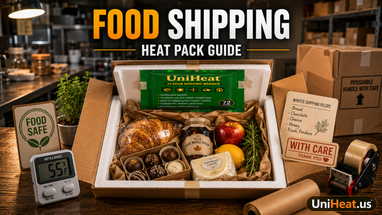
Food shipping has a counterintuitive winter problem: heat packs aren't there to warm the food. They're there to prevent the food from freezing. A frozen baked good cracks. A frozen chocolate develops fat bloom. A frozen meal kit ingredient changes texture forever. The same packs that protect live plants and reptiles from winter cold also protect food products from the same threat — with a few important differences in how they're used. This guide walks through what heat packs do for food shipments, FDA considerations, category-by-category selection, and how to build a reliable food shipping system within our broader cold-weather shipping framework.
The Short Answer: Heat Packs Prevent Food From Freezing
The most common misconception about food shipping heat packs is that they're meant to warm the food. They're not. A 72-hour heat pack in a food shipping box maintains the box interior in a stable above-freezing range — typically 50-70°F — for the duration of transit. The food doesn't get heated to a serving temperature; it gets protected from freeze damage that would otherwise occur during cold-weather routes.
This is the same protection logic we apply to other cold-sensitive products in our wider work, including our piece on gel packs vs heat packs and our broader cold-weather protection framework. Food is one more category in the same system — one with specific safety considerations layered on top.
What Heat Packs Do (and Don't Do) for Food Shipments
Understanding the distinction matters because it shapes every operational decision:
What Heat Packs Do:
- Maintain box interior above freezing during transit through cold hubs and cold destinations
- Buffer the food product against temperature shock during sorting facility exposure
- Provide consistent thermal conditions for the 24-96 hour shipping window
- Pair with proper insulation to extend duration as covered in our shipping container insulation guide
- Allow safe winter shipping of products that would otherwise freeze in transit
What Heat Packs Don't Do:
- Heat refrigerated food to room temperature (not their purpose, and dangerous for food safety)
- Replace refrigeration for products that must stay cold (use gel packs for those)
- Sterilize, cook, or prepare food in any way
- Cover hot food shipping (different chemistry entirely — not within heat pack scope)
- Work without proper insulation around them
This last point is critical. A heat pack in a thin cardboard food box loses effectiveness in hours, exactly the pattern we detailed in heat pack vs insulation in cold shipping. For food shipping specifically, the pack and the insulated container function as one system.
FDA and Food Safety Considerations
The FDA Food Safety Modernization Act (FSMA) establishes shipping requirements for food businesses, but it does not prohibit or restrict heat pack use. The relevant regulations focus on:
- Temperature control to prevent spoilage — ensuring perishable foods stay within safe temperature ranges
- Sanitation of shipping equipment — clean, food-safe containers and materials
- Documentation of shipping conditions — particularly for foods regulated under the Sanitary Transportation Rule
- Allergen and labeling compliance — required on packaging regardless of shipping method
Heat pack use is compatible with all of the above when done correctly:
- The pack contents (iron powder, salt, activated carbon, vermiculite) are inert and food-safe by composition
- Heat pack chemistry produces no fumes, gases, or residues that would migrate to food
- Standard shipping packs are sealed with food-safe wrapper materials
- Properly placed packs maintain food temperature within safe ranges
The non-negotiable food safety rule for heat pack use: no direct contact between the pack and the food or food packaging. A buffer layer of food-safe kraft paper, food-grade foam, or other approved separation material must be present at all times. This is one of the most common operational considerations covered in our piece on 5 common mistakes when using heat packs.
Food Categories: Meal Kits vs Baked Goods vs Frozen vs Fresh
Different food products have different shipping requirements. Here's how heat pack selection varies by category:
| Food Category | Freeze Risk | Recommended Pack | Insulation |
|---|---|---|---|
| Meal kits (fresh ingredients) | High | 72hr standard | 1.5″ foam, full cavity coverage |
| Bakery (bread, pastries, cakes) | Medium-High | 40-72hr | 1.5″ foam |
| Chocolate & confections | Critical | 72-96hr | 1.5-2″ foam |
| Fresh produce (fruits, veg) | High | 72hr | 1.5″ foam + interior buffer |
| Cheese & dairy | Medium-High | 72hr | 1.5″ foam |
| Honey, syrup, liquid goods | High (crystallization) | 72hr | 1.5″ foam |
| Frozen meals/products | Reversed (need cold + freeze prevention at wall) | Special: dry ice + minimal heat pack | 2″ foam |
For most fresh-ingredient food categories, the 72-hour pack with standard insulation handles winter shipping reliably. The exceptions are products with extreme sensitivity (premium chocolate, certain artisan cheeses) where the 96-hour pack provides extra margin, and frozen products where the entire shipping logic reverses.
Pack Selection by Food Category
Meal Kits
Meal kit boxes typically contain a mix of fresh produce, proteins, sauces, and dry goods packed together. The fresh produce and proteins are the limiting factor in cold-weather protection. A 72-hour heat pack taped to the inside of the lid, with 1.5″ foam insulation around the cavity, handles most meal kit winter routes through US zones 5-10. For cold-zone destinations or weekend-risk shipments, step up to 96-hour packs.
For meal kit companies operating at scale, the full operational framework is detailed in our piece on meal prep companies and cold-weather logistics, which covers SOPs, customer expectations, and scaling considerations.
Bakery Products
Fresh bread, pastries, cakes, and cookies have varying cold sensitivity. Plain bread is relatively cold-tolerant. Pastries with cream fillings or frostings can develop texture changes if frozen and thawed. Decorated cakes can suffer cosmetic damage at sub-freezing temperatures. The 40-72 hour pack range covers most bakery shipping needs.
A practical operational note: bakery products often ship in their own retail boxes inside the shipping container. Maintain the buffer-layer rule even when the inner box adds some separation — the heat pack should never be pressed against the inner product packaging directly.
Chocolate and Confections
Chocolate is one of the most challenging food categories to ship reliably in winter. Temperature swings cause fat bloom (white surface discoloration), texture changes, and visible damage. Premium chocolate shippers typically use 72-96 hour packs with thicker insulation to maintain stable temperature throughout transit.
The full protocol for this category is covered in detail in our piece on specialty food and chocolate shipping in cold weather, including pack selection, packaging configurations, and the cost-benefit analysis for premium options.
Fresh Produce
Fresh fruits and vegetables are highly cold-sensitive. Many tropical fruits develop chilling injury at temperatures above freezing — bananas damage below 56°F, tomatoes below 50°F. For shipping operations dealing with cold-sensitive produce, the 72-hour pack with full cavity insulation is the standard, with attention to the buffer layer between pack and product.
Cheese and Dairy
Soft cheeses and certain artisan cheeses can develop texture or flavor changes when frozen and thawed. Hard cheeses are more tolerant. A 72-hour pack handles most cheese shipping needs. For cheese subscription services, building a repeatable system is the topic of our piece on building a reliable cold shipping system.
Honey, Maple Syrup, and Liquid Goods
Liquid food products have a unique freeze problem: many crystallize or separate when frozen, and the process is partially irreversible. Honey crystallizes (recoverable but cosmetically affected). Maple syrup can lose flavor compounds. Cold-pressed oils can develop sediment. The 72-hour pack with standard insulation is the right choice for almost all liquid food categories.
Why Direct Contact Is Never Allowed
The most important food safety rule for heat pack use is the buffer-layer requirement. The heat pack should never directly touch food or food packaging. Here's why:
At activation, the heat pack surface can briefly exceed 100°F. Direct contact with food packaging can soften plastic films, melt waxed paper, or create localized hot spots that damage product. Direct contact with food itself can cause partial cooking of fresh ingredients or unwanted texture changes.
The standard buffer materials:
- Food-safe kraft paper — crumpled to fill space, allows airflow
- Food-grade foam sheets — for products needing extra cushion
- Recyclable corrugated dividers — for products in primary retail packaging
For comprehensive guidance on materials, see our piece on the top 3 packing materials to pair with heat packs, which applies directly to food shipping operations.
Insulation Pairing for Food Boxes
For food shipping specifically, the insulation requirements are slightly more demanding than non-food categories because the failure mode is more visible and immediate. A frozen plant can sometimes recover. A frozen chocolate is permanently damaged.
The standard for food shipping:
- 1.5″ EPS foam minimum on all six sides of the interior cavity
- No gaps at corners or seams (heat loss through gaps is the most common failure mode)
- Outer corrugated box for structural integrity (single or double-walled depending on weight)
- Reflective thermal bubble wrap optional supplement for premium shipments
For full insulation material analysis, our recent piece on shipping container insulation covers each option in detail. Box size considerations are in our box size and insulation selection guide.
Common Food Shipping Failures
The patterns we see repeatedly in food shipping failures:
Failure 1: Skipping the heat pack on overnight shipments. Overnight FedEx is rarely actually overnight in winter. Hub temperatures in Memphis and Indianapolis can be 15-25°F, and the package sits there for 4-12 hours during sorting. This is the exact pattern we covered in our piece on whether you need heat packs for overnight shipments — the short answer is almost always yes.
Failure 2: Pack pressed flat against food packaging. Even brief contact between the activated pack surface and food packaging can cause localized damage. Always maintain at least 1-2 inches of buffer material between the pack and product packaging.
Failure 3: Inadequate insulation for the route. A 72-hour pack in 1″ foam performs like a 24-hour pack in cold-zone destinations. The 1.5″ foam standard isn't arbitrary — it's the threshold below which performance drops rapidly.
Failure 4: Shipping Thursday or Friday. Weekend rollover doubles or triples the transit window. A package shipped Friday afternoon for "Saturday delivery" can sit at the hub through Sunday and not deliver until Monday. By that time, even a 96-hour pack is approaching exhaustion. The full ship-day discipline is in our piece on route package protection.
Failure 5: Ignoring cost-vs-protection math. The $4 pack upgrade pays for itself many times over when it prevents a $50-200 food product loss. The framework for thinking about this trade-off is in our piece on cost vs protection in heat pack usage.
Meal Prep Companies: Operational Considerations
Companies shipping meal kits or prepared meals at scale face operational considerations that one-off shippers don't:
- Pack activation timing across batches — activating 50 packs simultaneously is different from activating 1; staggered activation can help manage carrier pickup windows
- Pack inventory management — ordering in bulk vs just-in-time, shelf life tracking, peak season buffer
- Standardized packaging configuration — one configuration for all SKUs simplifies training and reduces errors
- Customer communication — tracking numbers, expected windows, what to do if package is left outside
- Loss tracking and analysis — route-level loss data drives continuous improvement
For the full operational SOP framework, see our resource on the winter shipping checklist for small businesses and the complete fall-to-winter shipping transition guide. For scaling considerations specifically, our piece on how to scale heat pack usage for higher volumes covers the bulk operations side.
Bakery and Chocolate Shipping Specifics
Bakery and chocolate shippers face a specific challenge: the products are highly cosmetic. Customers expect the chocolate to look like it did when it left the bakery. A small temperature swing that wouldn't matter for meal kit ingredients can ruin a decorated cake or premium chocolate bar.
The operational protocols that work for these categories:
- 96-hour pack as the default — not 72-hour, even for short routes, because the cost of failure is high
- Premium insulation — 1.5-2″ foam with reflective bubble wrap supplement
- Hold for Pickup on cold-zone routes — eliminates the porch-sitting failure mode
- Monday or Tuesday shipping only in active winter — absorbs more delay risk
- Photo documentation of every pack-out — proves the shipment was prepared correctly
The deeper guide for this category is our piece on specialty food and chocolate shipping, which goes into chocolate-specific packing and the cost economics of premium options.
Pack Activation Timing for Food Operations
The activation timing for heat packs in food shipping follows the same rules as other applications: open the wrapper 20-30 minutes before sealing the box, allow the pack to fully ramp up, then seal the box and hand off to the carrier.
The chemistry behind this timing is covered in our deep-dive on heat pack activation and performance. The short version: the iron oxidation reaction takes 20-40 minutes to reach full output, so an activated pack delivers full heat from the moment of carrier pickup — not the moment of opening the wrapper.
For high-volume food operations, batch activation is standard. The full duration framework, including how long packs really last in different conditions, is in our piece on how long heat packs really last in transit.
Real Food Shipping Examples with Numbers
Five practical scenarios with the recommended setup:
Scenario 1: Meal Kit Subscription, NY to TX, December
Origin: 30°F. Hub (Memphis): 20°F. Destination: 50°F. The cold hub exposure is the limiting factor. Use a 72-hour pack with 1.5″ EPS foam insulation. Ship Monday through Wednesday only. Standard FedEx Priority Overnight is sufficient. Per-shipment protection cost: $4 (pack) + $5 (foam liner) + $3 (outer box) = $12 all-in.
Scenario 2: Premium Chocolate, CA to NY, January
Origin: 55°F. Hub (Memphis): 18°F. Destination: 25°F. High-value product with cold destination. Use a 96-hour pack with 2″ foam plus reflective bubble wrap supplement. Ship Monday only. Hold for Pickup at destination FedEx Office to eliminate porch-sitting risk. Per-shipment protection cost: $6 (pack) + $8 (premium insulation) + $4 (box) = $18 all-in. For a $80 chocolate box, the protection cost is reasonable.
Scenario 3: Artisan Bakery, FL to CO, November
Origin: 70°F. Hub: 25°F. Destination: 30°F. Cold destination plus hub exposure. Use a 72-hour pack with 1.5″ foam. Standard residential delivery acceptable if destination weather is forecast above 25°F at delivery time. Per-shipment protection cost: $4 + $5 + $3 = $12.
Scenario 4: Honey/Maple Syrup, VT to AZ, December
Origin: 25°F. Hub: 22°F. Destination: 55°F. Cold origin and hub. 72-hour pack with 1.5″ foam handles this well. Ship Monday-Wednesday. Standard delivery acceptable at warm destination. Per-shipment protection cost: $4 + $5 + $3 = $12.
Scenario 5: Frozen Meal Service, IL to MN, January
This is the reverse problem: products must stay frozen. Use dry ice or specialty frozen-shipping gel packs, NOT heat packs. The shipping framework for products that must stay cold is covered in our piece on gel packs vs heat packs. Heat packs in this configuration would damage the frozen product. The decision logic for combination shipments (cold-sensitive box + freeze-sensitive product) is in our piece on combining heat packs with cold packs.
Documentation for Food Shipping Claims
Food shipments often have lower per-unit value than live animals or rare plants, but the volume is higher and the customer expectations are precise. Documentation matters for both claims and continuous improvement:
- Photo of assembled box before sealing (heat pack placement, insulation, product positioning)
- Photo of carrier receipt with timestamp
- Tracking number logged with route metadata
- Customer-reported issue documentation (photos of damage or temperature condition on arrival)
This data feeds your loss analysis, the same way it does for non-food shipping. The framework for using this data is covered in our piece on how to reduce winter shipping losses.
Pack Performance in Real Food Shipping Conditions
A reasonable question food shippers ask: do the packs actually deliver rated performance in real shipping conditions? We've documented this in our pieces on whether heat packs work in extreme cold testing results and managing expectations around heat pack performance.
The pattern is consistent: properly packaged shipments deliver close to rated duration even in challenging conditions. Poorly packaged shipments deliver dramatically less. The pack is one variable; the insulation, the route, and the timing are the others.
Multi-Pack Considerations for Larger Food Boxes
For larger food shipping boxes — bulk produce orders, multi-meal subscriptions, holiday gift assortments — one heat pack may not be enough. The decision logic is covered in our piece on how many heat packs you really need per box.
The key point: more packs do not extend duration. Two 72-hour packs burn through chemistry on the same timeline as one. What more packs do is provide more total heat output, which matters in larger boxes where one pack's heat doesn't reach all corners. For boxes larger than approximately 18″×18″×18″, two packs (placed at opposite corners of the top) are often the right configuration.
How Food Shipping Connects to the Broader System
Food shipping uses the same cold-weather protection system as live plants, live animals, beverages, and other temperature-sensitive products. The system has these components:
- Heat pack selection (40hr, 72hr, or 96hr) — matched to route and product needs
- Insulation (1.5″ foam standard) — from our shipping container insulation guide
- Buffer layer between pack and product (food-safe materials)
- Route awareness (three-point weather check) — from our route package protection playbook
- Ship-day discipline (Monday-Wednesday in winter)
- Documentation and continuous improvement loops
For food operations specifically, the system has one additional layer: food safety compliance, which the heat pack methodology naturally supports when executed correctly.
Highlights — The Food Shipping Reference Card
Frequently Asked Questions
Are heat packs safe to use with food shipments?
Yes, when used with proper buffer materials between the pack and the food. The heat pack contents (iron powder, salt, activated carbon, vermiculite) are inert and food-safe by composition. Heat pack chemistry produces no fumes or residues that would migrate to food. The non-negotiable rule is no direct contact between the pack and food or food packaging. Use food-safe kraft paper, food-grade foam, or recyclable corrugated dividers as a buffer layer.
Do heat packs heat up the food during shipping?
No. Heat packs in food shipping are used to maintain the box interior above freezing, typically in the 50-70 degrees Fahrenheit range, during cold-weather transit. The food itself does not get warmed to a serving temperature. The purpose is to prevent freeze damage, not to heat the food. Heat packs are not appropriate for shipping hot prepared food.
What heat pack duration is right for food shipping?
For most fresh food categories (meal kits, bakery products, produce, cheese, honey, syrup), the 72-hour heat pack with 1.5-inch EPS foam insulation is the standard winter configuration. Step up to the 96-hour pack for premium chocolate and confections, high-value artisan products, cold-zone destinations (USDA zones 3-5), or shipments where weekend delays are possible.
Can I ship frozen food with heat packs?
No. Heat packs in a frozen food shipment would damage the product by warming the box interior above freezing. Frozen food shipping uses dry ice or specialty sub-zero gel packs to maintain frozen temperatures throughout transit. Heat packs serve the opposite purpose, preventing freeze damage to products that need to stay above 32 degrees Fahrenheit, not products that need to stay frozen.
Does FDA regulate heat pack use in food shipping?
The FDA Food Safety Modernization Act (FSMA) regulates food shipping conditions but does not specifically prohibit or restrict heat pack use. The relevant FDA rules focus on preventing spoilage, maintaining sanitation, documenting shipping conditions, and complying with allergen labeling. Heat pack methodology is compatible with these requirements when packs are used with food-safe buffer materials and proper temperature control. Specific compliance requirements vary by food category, particularly for foods regulated under the Sanitary Transportation Rule.
How long can fresh meal kit ingredients last in shipping with a heat pack?
A properly packed meal kit in an insulated box with a 72-hour heat pack can safely transit for 2-3 days, with the box interior maintained in a stable above-freezing range throughout. Fresh produce and proteins remain safe and viable for this window. For longer transit times or cold-zone destinations, a 96-hour pack extends safe transit to 3-4 days. Beyond this window, the food should not be shipped via standard heat pack methodology.
What's the cost of heat pack protection per food shipment?
For most food shipping operations, the all-in protection cost (heat pack plus insulation plus outer box) lands around $10-18 per shipment. Standard 72-hour packs run $3-5 per shipment. EPS foam liners run $4-8. Outer corrugated boxes add $2-5. Premium options for high-value chocolate or specialty products may run $15-25 all-in. Relative to typical food product values of $40-150 per shipment, this protection cost is reasonable insurance against loss.
What food products should NOT be shipped with heat packs?
Hot prepared food (heat packs do not maintain hot serving temperatures), frozen food and frozen meals (heat packs would thaw the product), products that require refrigeration during transit (use gel packs instead), and food products that can't tolerate the 50-70 degrees Fahrenheit shipping range. For products that need to stay refrigerated or frozen, the appropriate methodology is gel packs or dry ice, not heat packs.
Summary
Food shipping with heat packs is a well-established methodology that protects cold-sensitive food products from freeze damage during winter transit. The core principle is straightforward: maintain the box interior above freezing using a properly sized heat pack and quality insulation, with food-safe buffer materials between the pack and the product.
For most food shipping categories — meal kits, bakery products, fresh produce, cheese, liquid goods — the 72-hour heat pack with 1.5″ EPS foam insulation is the standard winter configuration. Premium categories like chocolate and confections benefit from 96-hour packs and thicker insulation. Frozen products use entirely different methodology (dry ice or specialty gel packs).
FDA food safety compliance is fully compatible with heat pack use when packs are used with food-safe buffer materials and the methodology follows standard temperature-control principles. The economics work consistently: $10-18 in per-shipment protection costs pays back many times over when it prevents the loss of $50-200 in food product value plus the customer relationship damage of a failed shipment.
For the broader cold-weather shipping framework that connects food shipping to other temperature-sensitive verticals, see our shipping solutions resource center and our deep coverage on food shipping content and cold-weather shipping topics.