
Posted by UniHeatPacks on 2nd Jul 2026
How to Ship Wine, Beer & Spirits in Winter Safely (Full Guide)
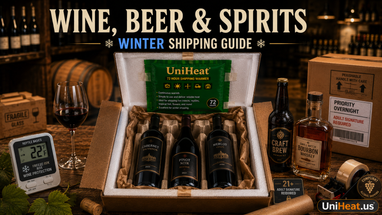
Shipping alcohol in winter has two problems most shippers underestimate: it's legally complex, and the products freeze at surprisingly high temperatures. Beer starts freezing at 28°F. Wine at 22°F. Even bourbon can develop cloudiness and separation at cold temperatures. Add glass bottles that can crack when frozen liquid expands, and winter DTC alcohol shipping becomes one of the more challenging cold-weather categories. This guide walks through the legal framework, the freezing science, pack and packaging selection, and the operational discipline that makes wine, beer, and spirits shipping work in cold-weather conditions — drawing on the same principles from our broader cold-weather shipping resource center.
The Short Answer: Yes, With the Right License and Carrier
Shipping alcohol in the US is legal, but only through licensed shippers using approved carriers. Wineries, breweries, distilleries, and specialty alcohol retailers can and do ship DTC (direct-to-consumer) millions of shipments per year. The infrastructure exists. The regulatory framework is stable. The technical challenges of cold-weather protection are the same ones we cover across other verticals in our gel packs vs heat packs analysis and our recent heat packs for food shipping guide, applied here to the specific case of glass bottles and alcohol content.
The challenge for individual sellers (not licensed alcohol businesses) is different: personal shipping of alcohol between states is generally not permitted. This guide focuses on the licensed DTC shipping context that most beverage businesses operate in.
Legal Requirements for Shipping Alcohol in the US
Alcohol shipping is regulated at three levels:
Federal Requirements
The federal Alcohol and Tobacco Tax and Trade Bureau (TTB) requires licensed shippers to hold Direct Shipper's Licenses. Federal law prohibits shipping alcohol via USPS. It permits shipping via private carriers (FedEx, UPS) with proper documentation.
State Origin Requirements
The state where the shipper is located has its own licensing requirements. Wineries need state winery licenses. Breweries need brewery licenses. Retailers need retail alcohol licenses. Each state defines what businesses can ship alcohol and under what conditions.
State Destination Requirements
The state where the customer receives the shipment has its own rules. Some states allow direct shipping from any licensed shipper. Some allow shipping only from wineries. Some require the customer to hold a permit. Some prohibit direct alcohol shipping entirely.
As of 2026, most states allow at least some form of direct-to-consumer wine shipping. Beer and spirits shipping rules vary more widely. A licensed alcohol business needs to maintain a compliance matrix that tracks these state-by-state rules, because they change through legislation and can affect operational decisions.
For the operational side of building this compliance framework, the same discipline that supports repeatable cold-weather shipping applies — covered in our piece on building a reliable cold shipping system.
Why Beer, Wine, and Spirits Freeze at Different Temperatures
The alcohol content of a beverage determines its freezing point. Pure water freezes at 32°F. Adding alcohol lowers the freezing point. The higher the alcohol content, the lower the freeze temperature.
| Beverage Category | Typical ABV | Freezing Point | Damage Onset |
|---|---|---|---|
| Beer (regular) | 4-6% | ~28°F | Below 32°F |
| Beer (craft/high-ABV) | 7-10% | ~25°F | Below 32°F |
| Cider | 4-8% | ~26°F | Below 32°F |
| Wine (table) | 12-14% | ~22°F | Below 30°F |
| Wine (fortified) | 17-22% | ~15°F | Below 28°F |
| Sparkling wine/champagne | 11-13% | ~23°F | Below 30°F (bottle burst risk) |
| Mead | 8-18% | ~22°F | Below 30°F |
| Spirits (whiskey, vodka, gin) | 40%+ | -15°F to -20°F | Below 20°F (cloudiness) |
The key insight: beer and wine freeze at temperatures that regularly occur in winter US shipping conditions. The Memphis FedEx hub can hit 18°F on a typical January night. A wine shipment sitting there for 8 hours will freeze without active heat protection. The route-based thinking we developed in our piece on route package protection applies with particular urgency to alcohol shipments.
What Happens When Wine Freezes
Wine freezing damage manifests in several ways, some visible and some subtle:
Cork Push-Out
When wine freezes, the liquid expands about 9%. In a full bottle, that expansion has to go somewhere. In wine bottles with corks, the frozen expansion pushes the cork partially out of the bottle, breaking the seal and often causing wine to leak past the cork. Even after thawing, the compromised seal exposes the wine to oxygen, which causes rapid quality degradation.
Bottle Cracking
Cheaper wine bottles or those with existing structural weaknesses can crack when frozen wine expands inside them. This is a total loss — the bottle and contents are unsalvageable, and the cracked glass creates a hazardous shipment for the recipient.
Flavor and Structural Degradation
Wine that freezes and thaws typically loses aromatic compounds, develops muted flavors, and can show visible sediment or crystallization (tartaric acid crystals). For premium wines where nuance matters, freeze-thaw damage is essentially permanent quality loss.
Label Damage
Freezing conditions cause condensation on the bottle exterior during transit warm-up cycles. This can damage labels, either during transit or on arrival. Premium wine buyers care about label condition — a damaged label reduces resale value and gift viability.
What Happens When Beer Freezes
Beer freezing damage is often more dramatic because carbonation adds pressure:
Bottle Burst Risk
Beer bottles are pressurized from carbonation. When beer freezes and expands, the pressure inside the bottle increases dramatically. Cheap or thin-walled bottles can burst, spraying frozen beer inside the shipping container and destroying the shipment. This is one of the highest-risk failure modes in beer shipping.
Can Deformation
Beer cans, especially thin-walled aluminum, can bulge or split when the beer inside freezes. This compromises the seal, allows CO2 to escape, and damages the product beyond salvage. Craft breweries that ship in cans need to be particularly careful about winter freeze protection.
Flavor Damage
Frozen and thawed beer typically loses head retention, tastes flat, and can develop off-flavors from the disruption to yeast and proteins in the beverage. Craft beer buyers are particularly sensitive to this — freeze damage on a $30 mixed six-pack is a total experience loss.
Sparkling Wine and Champagne
Sparkling wines share the pressure-burst risk with beer. A champagne bottle exposed to freeze conditions can pop the cork out under pressure or crack the bottle entirely. Premium champagne shippers require enhanced protection during any cold-weather transit.
Heat Pack Selection for Alcohol Shipments
The pack selection framework for alcohol follows the same logic we've developed across other verticals in our how to choose the right heat pack guide and our duration selection framework, with a few alcohol-specific considerations:
40-Hour Pack: Very Limited Use
A 40-hour pack only makes sense for short intra-state routes in mild winter conditions to warm destinations. For most alcohol shipping, this tier is under-protected. Even in "warm" routes, hub exposure creates freeze risk that the 40-hour pack may not cover reliably.
72-Hour Pack: The Alcohol Shipping Standard
The 72-hour heat pack is the winter standard for most wine, beer, and spirits shipping. It provides 24 hours of expected transit, 24 hours of buffer for typical delays, and another 24 hours of margin. For overnight FedEx Priority delivery between US zones 6-10 in active winter, the 72-hour pack is the right choice.
96-Hour Pack: Cold Destinations and Premium Products
The 96-hour heat pack is the upgrade for:
- Destinations in USDA zones 3-5 during active winter
- Cross-country wine club shipments
- Premium wine, champagne, or aged spirits where the cost of loss is high
- Shipments where Thursday-to-Monday transit is possible
- Sparkling wines and champagnes where bottle-burst risk is higher
For high-value wine club shipments and premium spirits, the modest cost upgrade to 96-hour packs is usually worth it. The cost-benefit math is the same one we work through in our piece on cost vs protection in heat pack usage.
Packaging Requirements for Glass Bottles
Alcohol packaging has two overlapping requirements: freeze protection AND breakage protection. Glass bottles need cushioning against impact during transit through carrier sorting, plus insulation against cold-weather routes. Both challenges are usually addressed with the same packaging system.
Standard Wine/Spirits Bottle Packaging
- Outer corrugated box — specifically sized to hold the bottles snugly without shifting
- Molded pulp inserts or corrugated dividers — individually secure each bottle
- Foam insulation liner — 1.5″ EPS foam on all six sides for winter shipping
- Heat pack — taped to the inside top of the insulated cavity
- Buffer layer — kraft paper between the heat pack and the bottle tops
- Outer labels — ORM-D (or "Wine/Spirits" declaration), Adult Signature Required, This Side Up, Fragile
Beer Case Packaging
Beer shipments (typically 4-, 6-, 12-, or 24-packs) require additional consideration for the case itself. Bottles need protection between themselves within the case, and the case needs protection against the outside container. The insulation and heat pack pairing is essentially the same as wine, with attention to the case-level cushioning.
Materials for Fragile-Plus-Cold Shipping
The combination of glass bottles and cold-weather requirements means paying particular attention to your packing materials. Our guide on the top 3 packing materials to pair with heat packs applies directly, along with our resource on choosing the right box size and insulation. For deeper insulation material choices, our recent shipping container insulation guide covers the full material comparison, and for the containers-vs-bags decision, see our piece on insulated food delivery bags vs boxes. Bulk pack purchasing is available through our UniHeat shop.
Adult Signature Requirements
Federal regulations require Adult Signature (21+) for all alcohol deliveries. This is not optional. Both FedEx and UPS provide Adult Signature Required as a service add-on, and it must be selected for every alcohol shipment.
The operational implication: alcohol shipments cannot be left on porches. If no adult is present at delivery, the carrier holds the package at the local facility and requires the recipient to pick it up. This is actually a favorable pattern for winter shipping, because it means the package doesn't sit outside in cold weather — but it does require customer communication.
For further protection in cold-zone destinations, requesting Hold for Pickup rather than residential delivery attempts is often the smartest choice. This eliminates the delivery-attempt-fails-and-package-sits-in-truck failure mode. Our piece on route package protection covers the Hold for Pickup framework in detail.
FedEx vs UPS for Alcohol Shipping
Both FedEx and UPS ship alcohol under contract with licensed shippers. USPS does not. Each carrier has slightly different requirements:
FedEx
- Requires an Alcohol Shipping Agreement
- Special adult signature service (FedEx Adult Signature)
- Priority Overnight and 2-Day Air both eligible
- State-by-state alcohol declaration required on shipping label
- Standard damage claims process with alcohol-specific documentation
UPS
- Requires a Signed Alcohol Shipping Contract
- Adult signature required service
- Multiple service tiers eligible
- UPS-branded alcohol shipping supplies available for contracted accounts
- Standard damage claims process
For winter cold-weather protection, FedEx Priority Overnight tends to be the standard choice for alcohol shippers, for the same reasons it's standard across other verticals — shorter transit, less hub exposure time, better protection for the pack duration. The trade-off between service tiers is covered in our piece on whether you need heat packs for overnight shipments.
State-by-State Considerations
As of 2026, most US states allow direct-to-consumer wine shipping, but the specific rules vary significantly. A general framework:
Wine Shipping
Approximately 47 states allow some form of DTC wine shipping. Restrictions vary from license requirements, quantity limits, and monthly caps to reciprocity requirements between states. Wineries need to maintain a compliance matrix and update it regularly.
Beer Shipping
Fewer states allow DTC beer shipping than wine. As of 2026, about 15 states permit DTC beer shipping in some form. Craft breweries expanding into DTC often start with the states that permit it and grow from there.
Spirits Shipping
DTC spirits shipping is the most restrictive of the three categories. About 10 states permit DTC spirits shipping directly. Some states allow distilleries to ship but not retailers. Small-batch distilleries often use fulfillment partners in permitted states rather than shipping directly from their production location.
The compliance framework needs regular updates. State legislation changes affect operations. Some states periodically consider new rules that would expand or restrict shipping. Alcohol shippers typically subscribe to industry associations that track these changes. For operations serving cold-zone states specifically, our testing data on whether heat packs work in extreme cold is directly relevant to what's achievable in the coldest destination zones.
Common Alcohol Shipping Mistakes
Five patterns that show up repeatedly in alcohol shipping failures:
Mistake 1: Assuming glass is "sturdy" and skipping the freeze protection. Glass wine bottles crack when frozen wine expands. Beer bottles burst when carbonation pressure combines with freezing. Even sturdy spirit bottles can lose seals to freeze-driven pressure changes. Freeze protection is not optional for winter alcohol shipping.
Mistake 2: Using the cheapest insulation to save costs. A thin-walled foam liner or bubble wrap alternative won't provide the sustained thermal performance needed for 24-48 hour transit through cold hubs. The savings are pennies; the losses are dollars per shipment.
Mistake 3: Shipping Thursday or Friday during peak winter. Weekend delays for alcohol shipments compound the freeze risk. A package shipped Thursday, held for Adult Signature, and picked up Monday morning has been in transit for 96+ hours. The full ship-day discipline is covered in our piece on how to reduce winter shipping losses.
Mistake 4: Ignoring hub weather forecasts. The Memphis and Indianapolis FedEx hubs regularly hit temperatures well below wine and beer freezing points. Even a warm-origin-to-warm-destination shipment can freeze during hub transit. The three-point weather check we detailed in our route package protection playbook is critical for alcohol shipping.
Mistake 5: Under-communicating with customers about Adult Signature. Wine clubs and DTC alcohol businesses that fail to educate customers about the delivery requirements experience high missed-delivery rates. Missed deliveries mean the package returns to the carrier facility, gets held for pickup, and may be lost or damaged in the process. Clear customer communication before shipment prevents this.
Real Alcohol Shipping Scenarios with Numbers
Scenario 1: Napa Valley Winery to Boston, December
Origin: 55°F. Hub (Memphis): 18°F. Destination: 25°F. Product: two bottles of Cabernet Sauvignon at $80 each. Configuration: 72-hour heat pack, 1.5″ EPS foam, molded pulp inserts, corrugated outer, Adult Signature Required, FedEx Priority Overnight, Ship Monday only. Total protection cost: ~$18. Product value: $160. The protection cost is 11% of product value — standard for premium wine shipping.
Scenario 2: Vermont Craft Brewery to Florida, January
Origin: 20°F. Hub: 22°F. Destination: 70°F. Product: 12-pack of IPA at $45. Configuration: 72-hour heat pack, 1.5″ EPS foam liner around case, buffer between pack and cans, FedEx Priority Overnight. The cold origin is the main challenge; destination is fine. Protection cost: ~$16. Ship Monday-Wednesday only. The company's ship-day discipline matters more than pack tier for this route.
Scenario 3: Kentucky Distillery to Minnesota, January
Origin: 25°F. Hub (Memphis): 20°F. Destination: -5°F. Product: single bottle of aged bourbon at $150. Extreme destination cold requires the 96-hour heat pack, thicker foam insulation, and Hold for Pickup at destination FedEx station. Protection cost: ~$22. The higher-cost configuration is justified by the extreme route conditions and the high product value.
Scenario 4: California Wine Club Monthly Shipment
A wine club ships 3 bottles per month to subscribers across the US. For winter shipments (October-March), the standard configuration is 72-hour heat pack + 1.5″ EPS foam + molded pulp inserts + FedEx Priority Overnight with Adult Signature. Cold-zone destinations upgrade to 96-hour packs. The operational simplicity of standardization matters at scale, similar to what we cover in our piece on how to scale heat pack usage for higher volumes.
Scenario 5: Sparkling Wine Holiday Gift
Premium sparkling wine gift box shipped in December to a warm destination. Product value: $200+. Configuration: 96-hour heat pack (pressure-burst risk from freeze is high with sparkling wines), premium 2″ foam insulation, reflective bubble wrap supplement, molded pulp bottle protection, Adult Signature Required with Hold for Pickup, Ship Monday only. Protection cost: ~$28. Justified by product value and the specific champagne freeze-burst risk.
Insulation Standards for Alcohol Shipments
The 1.5″ EPS foam standard applies to alcohol shipping, with some category-specific considerations. Beer and sparkling wine shipments benefit from slightly enhanced insulation because the freeze-burst risk is higher. Aged spirits in premium presentations often justify the thicker foam upgrade because product values are higher.
The systematic thinking about insulation-to-pack pairing is covered in our piece on heat pack vs insulation in cold shipping. For alcohol specifically, the added variable is the fragility of glass bottles, which pushes toward better insulation configurations that also provide better cushioning.
Multi-Bottle Shipments and Pack Configuration
For shipments larger than 2-3 bottles, the question of pack configuration becomes relevant. Our piece on how many heat packs you really need per box covers the framework.
For a 6-bottle wine case, a single 72-hour heat pack in a properly insulated cavity is usually sufficient. For a 12-bottle case in a larger insulated box, two heat packs placed at opposite corners provide better heat distribution than one pack. The chemistry doesn't extend, but the heat coverage does.
Documentation for Alcohol Shipping Claims
Alcohol shipping claims documentation adds a layer beyond standard cold-weather shipping documentation because both freeze damage AND breakage can occur:
- Photo of assembled box before sealing (heat pack, insulation, bottle placement)
- Photo of carrier receipt with timestamp
- Tracking number with route metadata (origin, hub, destination weather forecast at ship time)
- Customer-reported damage photos (bottle condition, cork position, label state, any evidence of freezing)
- Batch or lot tracking for the pack and packaging materials used
For the operational framework on using this data to drive continuous improvement, see our piece on managing expectations around heat pack performance and our resource on the winter shipping checklist for small businesses.
The Cost Economics of Alcohol Shipping Protection
Alcohol shipments tend to be high-value relative to shipping cost, which makes the protection math favorable:
- Standard 2-bottle wine shipment: $80-160 product value, $16-20 protection cost (10-25% of product value)
- Premium wine gift: $150-300 product value, $20-28 protection cost (7-19% of product value)
- Craft beer 12-pack: $40-60 product value, $16-20 protection cost (25-50% of product value)
- Craft spirits single bottle: $60-200+ product value, $18-25 protection cost (10-40% of product value)
The percentage of product value spent on protection is highest for lower-value items like standard beer packs, which is why some breweries limit DTC beer shipping to higher-value seasonal releases. For higher-value categories (premium wine, aged spirits, champagne), the protection cost is a small percentage of product value and always justified.
Adjacent Categories with Similar Challenges
The cold-weather shipping principles for alcohol overlap with other beverage and specialty categories. If your operation ships across multiple product types, the same fundamental system supports all of them:
- Non-alcoholic beverages (kombucha, specialty sodas, cold-brew coffee) — freeze at similar temperatures to beer, use similar configurations. Our piece on the essential guide to shipping beverages safely during winter applies directly.
- Premium chocolate and confections — different failure mode but similar packaging philosophy, covered in our specialty food and chocolate shipping guide.
- Cheese subscription services — similar transit-time requirements, similar cold-zone challenges, covered in our recent piece on heat packs for food shipping.
For the full cold-weather shipping system that spans these verticals, see our shipping solutions resource center.
How Alcohol Shipping Connects to the Full System
Alcohol shipping is one vertical within the broader cold-weather protection system. The complete system requires:
- The right heat pack — covered in our heat pack activation and performance guide and how long heat packs last in transit
- The right insulation — covered in our shipping container insulation guide
- The right route strategy — covered in our route package protection playbook
- The right operational discipline — covered across our heat pack content library
- The right vertical-specific knowledge — the topic of this article and our other vertical guides
Each piece matters. Perfect vertical knowledge with poor route planning still fails. Great pack selection with inadequate insulation still fails. The systems thinking is the differentiator between operations that run 1-2% winter loss rates and operations that run 8-15%.
Highlights — The Alcohol Shipping Reference Card
Frequently Asked Questions
How do you ship liquor safely in winter?
Ship liquor in winter using a 72-hour heat pack with 1.5-inch EPS foam insulation, molded pulp bottle inserts for cushioning, and FedEx Priority Overnight service with Adult Signature Required. Ship Monday through Wednesday only during active winter. For cold-zone destinations (USDA zones 3-5) or extreme routes, upgrade to a 96-hour heat pack and consider Hold for Pickup at the destination FedEx station. Total protection cost typically runs $16-25 per shipment, small relative to typical alcohol product values.
Can I ship wine in the winter without heat packs?
No, not reliably. Wine freezes at approximately 22 degrees Fahrenheit, which is well within the range of typical winter temperatures at FedEx sorting hubs like Memphis (which regularly drops into the teens in January). Without heat pack protection, wine shipments through cold hubs risk cork push-out, bottle cracking, and permanent quality damage. The industry standard is a 72-hour heat pack with quality insulation for any winter wine shipment.
What temperature is dangerous for beer shipping?
Beer damage begins at temperatures below 32 degrees Fahrenheit. Regular beer (4-6% ABV) freezes at approximately 28 degrees Fahrenheit. Craft beer with higher alcohol content (7-10% ABV) freezes around 25 degrees Fahrenheit. The pressure from carbonation combined with freeze expansion can burst bottles or bulge cans. For winter beer shipping, protection is required whenever routes may hit temperatures below 32 degrees Fahrenheit at any point.
Does USPS ship alcohol?
No. Federal law prohibits shipping alcohol via USPS. Alcohol shippers must use private carriers, primarily FedEx or UPS, and must hold a signed Alcohol Shipping Agreement with the carrier. Both FedEx and UPS ship alcohol under contract with licensed wineries, breweries, distilleries, and permitted retailers. USPS attempts to ship alcohol are illegal and will result in package seizure and potential criminal liability.
What legal requirements apply to shipping alcohol?
Alcohol shipping is regulated federally by the TTB (Alcohol and Tobacco Tax and Trade Bureau), by the origin state's alcohol regulatory agency, and by the destination state's regulations. Shippers need appropriate licenses (winery license, brewery license, or retail alcohol license depending on business type). Each state has different rules for what can be shipped to consumers within that state. Adult Signature (21+) is required for all alcohol deliveries. The compliance matrix needs regular updates as state laws change.
How many bottles can I ship per box?
Standard configurations range from 1-bottle premium spirits presentations up to 12-bottle wine cases and 24-can beer variety packs. The pack and insulation configuration scales with box size. For 1-6 bottles, a single 72-hour heat pack with 1.5-inch EPS foam is standard. For 12-bottle cases in larger boxes, two heat packs placed at opposite corners provide better heat distribution. Very large multi-case shipments benefit from 96-hour packs and enhanced insulation.
What's the difference between shipping wine vs. beer vs. spirits?
Wine and beer freeze at higher temperatures than spirits (22-28 degrees Fahrenheit vs -15 to -20 degrees Fahrenheit), so they have higher freeze risk in typical winter routes. Beer bottles have added pressure-burst risk from carbonation. Wine has cork-push-out risk. Spirits are more freeze-resistant but can develop cloudiness and quality issues at cold temperatures. State legal rules also vary significantly by category, with wine having the broadest DTC shipping permission and spirits the most restrictive.
Do I need to be present to receive an alcohol shipment?
Yes. Adult Signature Required (21+) is a federal requirement for all alcohol shipments. If no adult is present at delivery, the carrier holds the package at the local facility and requires the recipient to pick it up with valid ID. This is actually favorable for winter shipping because it prevents packages from sitting outside in cold weather. For cold-zone destinations, requesting Hold for Pickup rather than residential delivery attempts is often the smartest choice.
Summary
Wine, beer, and spirits shipping in winter combines legal complexity with technical cold-weather challenges. The legal framework requires licensing at federal and state levels, private carrier contracts, and Adult Signature at delivery. The technical challenge is protecting freeze-sensitive liquid inside fragile glass bottles through multi-day carrier transit that often passes through cold hubs.
The standard configuration handles most cases: a 72-hour heat pack with 1.5″ EPS foam insulation, molded pulp bottle inserts for cushioning, Adult Signature Required, and FedEx Priority Overnight service. Premium products and cold-zone destinations justify the 96-hour pack upgrade. Ship Monday through Wednesday only in active winter. Check the three-point weather forecast (origin, hub, destination) before every shipment.
For wineries, breweries, distilleries, and specialty alcohol retailers building sustainable DTC operations, the protection framework is well-established and reliable when executed with discipline. Total cost per shipment (10-25% of product value) is standard for the category. For the broader cold-weather shipping system, see our shipping solutions resource center and our deep coverage on beverage shipping and heat pack topics.