
Posted by UniHeatPacks on 4th May 2026
Heat Pack vs Insulation: What Matters More in Cold Shipping?
When it comes to cold weather shipping, one common question comes up again and again: should you rely on heat packs or insulation?
The truth is, it’s not really a competition. In this guide, we break down heat pack vs insulation and explain what actually matters more—and how combining both with UniHeat heat packs creates the most reliable protection.
What Heat Packs Actually Do
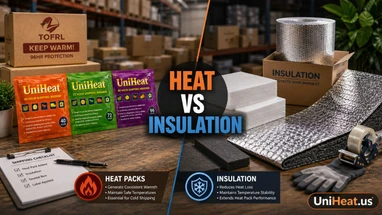
Heat packs generate warmth inside a shipping box. They are designed to maintain a stable internal temperature during transit, especially in freezing conditions.
Without a heat source, products are fully exposed to external cold temperatures.
- Provide active heat generation
- Work for a fixed duration (40hr, 72hr, 96hr)
- Protect against freezing during transit
For example, choosing between a 40 Hour Heat Pack Uniheat, 72 Hour Heat Pack Uniheat, or 96 Hour Heat Pack Uniheat depends on how long protection is needed.
What Insulation Actually Does
Insulation works differently. It does not generate heat—it simply slows down heat loss.
Think of insulation as a barrier between the inside of the box and the outside environment.
- Retains heat inside the package
- Reduces temperature fluctuations
- Extends the effectiveness of heat packs
Common insulation materials include thermal liners, foam inserts, and insulated wraps.
Heat Pack vs Insulation: The Key Difference
Here’s where most confusion happens.
Heat packs create warmth. Insulation preserves it.
If you use insulation alone, there is no heat to retain. If you use heat packs alone, the heat escapes quickly.
Using only one of these methods significantly increases the risk of shipping failure.
Which Matters More?
This is where it gets a bit tricky… because the answer isn’t one or the other.
If you had to choose, heat packs would matter slightly more—because without a heat source, insulation alone cannot prevent freezing.
But in real-world shipping, relying on heat packs without insulation also leads to failure.
So while heat packs are essential, insulation is what makes them effective.
Why Combining Both Works Best
The most reliable shipping setups always use both heat packs and insulation together.
This combination creates a controlled micro-environment inside the package.
- Heat packs generate warmth
- Insulation traps and distributes that warmth
- Products stay protected for longer periods
It’s a simple idea… but it makes a huge difference in results.
Common Mistakes to Avoid
Many shipping failures come from misunderstanding how these two elements work together.
- Using insulation without a heat pack
- Using heat packs without insulation
- Choosing the wrong heat pack duration
- Poor placement inside the box
Even small mistakes here can lead to product damage.
Building a Reliable Cold Shipping Setup
If you’re aiming for consistent results, the goal isn’t choosing between heat packs and insulation—it’s using them correctly together.
That means selecting the right heat pack duration, pairing it with proper insulation, and packing everything correctly.
It sounds simple… but it’s where most improvements happen.
Frequently Asked Questions
Can insulation replace heat packs?
No. Insulation cannot generate heat, it only slows heat loss.
Are heat packs enough without insulation?
No. Without insulation, heat escapes quickly and reduces effectiveness.
Which is more important in cold shipping?
Heat packs are essential, but insulation is necessary to make them effective.
What is the best approach?
Using both heat packs and insulation together provides the best protection.
Summary: Heat packs and insulation serve different roles but work best together. Heat packs generate warmth, while insulation preserves it. Combining both creates the most reliable cold shipping solution.