
Posted by UniHeatPacks on 27th Apr 2026
How to Choose the Right Heat Pack for Your Shipment
Choosing the right heat pack for your shipment is one of the most important decisions in cold weather shipping. The wrong choice can lead to frozen products, damaged goods, and unnecessary losses.
In this guide, we explain how to choose the right heat pack for your shipment based on transit time, temperature conditions, and packaging setup—using proven strategies and UniHeat heat packs.
Understand Your Shipping Conditions
The first step is understanding the conditions your shipment will face. Heat pack selection depends heavily on how long and how cold the journey will be.
Key factors to consider include transit time, destination climate, and potential delays.
Carrier trucks and warehouses are usually not temperature-controlled, even in winter.
Choose Heat Pack Duration Based on Transit Time
Heat packs are designed to provide warmth for a specific number of hours. Selecting the correct duration is critical for protecting your shipment.
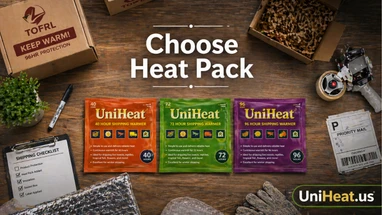
- Use 40 Hour Heat Pack Uniheat for short-distance shipments (1–2 days)
- Use 72 Hour Heat Pack Uniheat for standard shipping (2–3 days)
- Use 96 Hour Heat Pack Uniheat for long-distance or delayed shipments (3–5 days)
When in doubt, choosing a longer-duration heat pack provides extra protection against delays.
Consider External Temperature Conditions
Temperature plays a major role in how effective a heat pack will be. Colder environments require longer-lasting heat packs and stronger insulation.
If shipments travel through freezing regions, shorter-duration heat packs may not provide enough protection.
Always plan for worst-case temperature scenarios, not average conditions.
Use Insulation to Maximize Performance
Heat packs work best when combined with insulation. Without insulation, heat escapes quickly and reduces effectiveness.
Recommended insulation materials include:
- Thermal liners
- Foam inserts
- Insulated bubble wrap
- Double-wall boxes
This combination helps create a stable temperature environment inside the package.
Position Heat Packs Correctly
Even the right heat pack can fail if placed incorrectly. Heat rises, so placement inside the box matters.
Place heat packs near the top of the shipment and avoid direct contact with products.
Use cardboard or padding between the heat pack and product to prevent overheating in specific spots.
Factor in Potential Shipping Delays
Delays are common during winter and peak seasons. Packages may sit in unheated environments longer than expected.
Choosing a heat pack that exceeds estimated transit time helps protect against these delays.
This small adjustment can significantly reduce shipping risks.
Match Heat Pack Selection to Product Sensitivity
Not all products require the same level of protection. Some items are more sensitive to temperature changes than others.
Highly sensitive products may require longer-duration heat packs and additional insulation layers.
Understanding your product helps you choose the right level of protection.
Frequently Asked Questions
How do I know which heat pack to choose?
Select based on transit time, temperature conditions, and risk of delays.
Is it better to use a longer heat pack duration?
Yes, longer durations provide extra protection in case of delays.
Can heat packs work without insulation?
No. Insulation is necessary to retain heat and maintain effectiveness.
Where should heat packs be placed inside the box?
Near the top, with padding between the heat pack and product.
Summary: Choosing the right heat pack depends on transit time, temperature, and packaging setup. By combining proper heat pack duration with insulation and correct placement, businesses can protect shipments and reduce cold-weather damage.