
Posted by UniHeatPacks on 7th Apr 2026
End-of-Year Heat Pack Best Practices
As the year comes to a close, shipping operations often face increased pressure from higher volumes, colder temperatures, and tighter deadlines. Without proper planning, these conditions can lead to product damage, delays, and costly replacements.
In this guide, we cover the most important end-of-year heat pack best practices to help protect temperature-sensitive shipments and maintain consistency using proven packaging methods and UniHeat heat packs.
Plan for Increased Shipping Volume
End-of-year shipping typically brings a surge in order volume. More packages in transit means longer handling times and increased exposure to cold environments.
Preparing for this spike allows businesses to adjust packaging strategies and ensure shipments remain protected during delays.
Higher volume often leads to longer transit times—plan for it, not against it.
Choose the Right Heat Pack Duration
End-of-year delays make it critical to choose heat packs that match actual transit conditions—not just estimated delivery times.
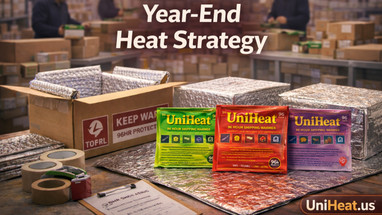
- Short-distance shipments can benefit from 40 Hour Heat Pack Uniheat
- Standard regional shipping works well with 72 Hour Heat Pack Uniheat
- Longer or delayed shipments should rely on 96 Hour Heat Pack Uniheat
Choosing a longer duration than expected transit time provides an extra layer of protection.
Combine Heat Packs with Proper Insulation
Heat packs alone cannot guarantee protection. Without insulation, heat escapes quickly and leaves shipments vulnerable.
Best practice is to combine heat packs with effective insulation materials such as:
- Thermal liners
- Foam inserts
- Insulated wraps
- Double-wall boxes
This combination helps maintain a stable internal temperature during transit.
Ensure Proper Heat Pack Placement
Incorrect placement can reduce the effectiveness of even high-quality heat packs. Since heat rises, positioning matters.
Place heat packs near the top of the shipment and separate them from products using padding or cardboard.
Avoid direct contact between heat packs and products to prevent temperature hotspots.
Ship Early in the Week to Avoid Delays
End-of-year shipping delays are more common, especially over weekends and holidays. Packages can remain in unheated facilities for extended periods.
Shipping earlier in the week reduces the risk of prolonged cold exposure.
Train Teams for Consistent Packing
Consistency is critical during high-volume periods. Every shipment should follow the same packing standards to reduce variability.
Ensure your team understands:
- Heat pack activation timing
- Correct placement techniques
- Proper insulation use
- Packaging quality checks
Clear processes help reduce human error and improve reliability.
Prepare for Unexpected Weather Conditions
Weather conditions can change rapidly during the end of the year. Planning for extreme cold ensures shipments remain protected even under worst-case scenarios.
Using longer-duration heat packs and better insulation helps reduce the impact of unpredictable conditions.
Frequently Asked Questions
Why are end-of-year shipments more risky?
Higher volumes and delays increase exposure to cold temperatures.
Should I use longer-duration heat packs in winter?
Yes, especially when delays are likely or transit times are uncertain.
Is insulation necessary with heat packs?
Yes. Insulation helps retain heat and improves overall protection.
What is the best shipping day during peak season?
Shipping Monday to Wednesday reduces weekend delays and cold exposure.
Summary: End-of-year shipping requires careful planning, proper heat pack selection, and consistent packing practices. By following these best practices, businesses can protect their shipments and avoid costly winter damage.