
Posted by UniHeatPacks on 17th Mar 2026
When 96hr Heat Packs Are Essential
Not all winter shipments require the same level of temperature protection. While shorter-duration heat packs may work for quick deliveries, certain shipping scenarios demand longer-lasting heat coverage to prevent freezing and product damage.
In this guide, we explain when 96hr heat packs are essential, how to choose the right duration, and how to optimize performance using proper packaging techniques and UniHeat heat packs.
Understanding Heat Pack Duration and Its Impact
Heat packs are designed to provide steady warmth over a fixed period. Choosing the right duration depends on how long a shipment will be exposed to cold conditions.
Shorter-duration options like 40 Hour Heat Pack Uniheat are ideal for local or expedited deliveries, while 72 Hour Heat Pack Uniheat offers extended protection for regional shipments.
However, when transit times become unpredictable or significantly longer, only a 96 Hour Heat Pack Uniheat can provide the consistent coverage needed to protect temperature-sensitive products.
When Shipping Times Exceed 3 Days
If your shipment is expected to be in transit for more than 72 hours, a longer-duration heat pack becomes essential. Delays caused by weather, logistics bottlenecks, or routing changes can easily extend delivery times.
In these cases, relying on shorter-duration heat packs increases the risk of temperature loss before delivery.
A shipment expected to arrive in 2 days can quickly turn into a 4-day delivery during winter disruptions.
When Shipping Across Multiple Climate Zones
Shipments traveling long distances often pass through different temperature zones. A package may start in mild conditions but move through freezing regions during transit.
These fluctuations increase the need for longer heat duration. A 96hr heat pack ensures that temperature protection remains consistent regardless of route changes or regional weather differences.
When Weekend Delays Are Likely
Weekend delays are one of the most overlooked risks in winter shipping. Packages shipped later in the week may sit idle in unheated facilities for extended periods.
Even if transit time is short, these delays can expose shipments to cold temperatures for much longer than expected.
If shipping later in the week is unavoidable, using a 96hr heat pack provides a safety buffer against unexpected delays.
When Shipping High-Value or Sensitive Products
For premium beverages, specialty liquids, or fragile goods, the cost of damage can be significantly higher than the cost of upgraded shipping protection.
In these cases, using a longer-duration heat pack reduces risk and protects both product quality and brand reputation.
Choosing a 96hr heat pack provides added confidence, especially when shipping products that cannot tolerate freezing temperatures.
How to Maximize 96hr Heat Pack Performance
Even the longest-lasting heat pack requires proper packaging to perform effectively. To get the best results:
- Use insulation to retain heat inside the box
- Position the heat pack near the top of the shipment
- Avoid direct contact with bottles or fragile items
- Allow airflow for proper activation
- Select appropriate box size and packing materials
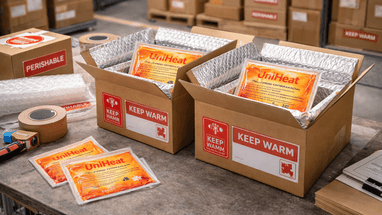
When combined with proper insulation and packing techniques, 96hr heat packs provide reliable protection throughout extended winter shipping conditions.
Frequently Asked Questions
When should I use a 96hr heat pack instead of a 72hr?
Use a 96hr heat pack when transit times may exceed 3 days or when delays are likely during winter shipping.
Are 40hr heat packs enough for short shipments?
Yes, 40hr heat packs are suitable for local or expedited deliveries where transit time is predictable.
Can I use multiple shorter heat packs instead?
Using multiple packs may help, but it does not replace the consistency of a properly designed long-duration heat pack.
Do 96hr heat packs require special packaging?
No, but they perform best when combined with insulation and proper airflow inside the box.
Summary: 96hr heat packs are essential for long-distance shipments, unpredictable transit times, and high-value products. By choosing the correct heat pack duration and combining it with proper packaging, businesses can significantly reduce the risk of winter shipping damage.